




















Jorge Araya, Consultant Tissue & Hygiene, Euromonitor International, finds that adding value is a key opportunity for Mexican manufacturers.
Key data findings
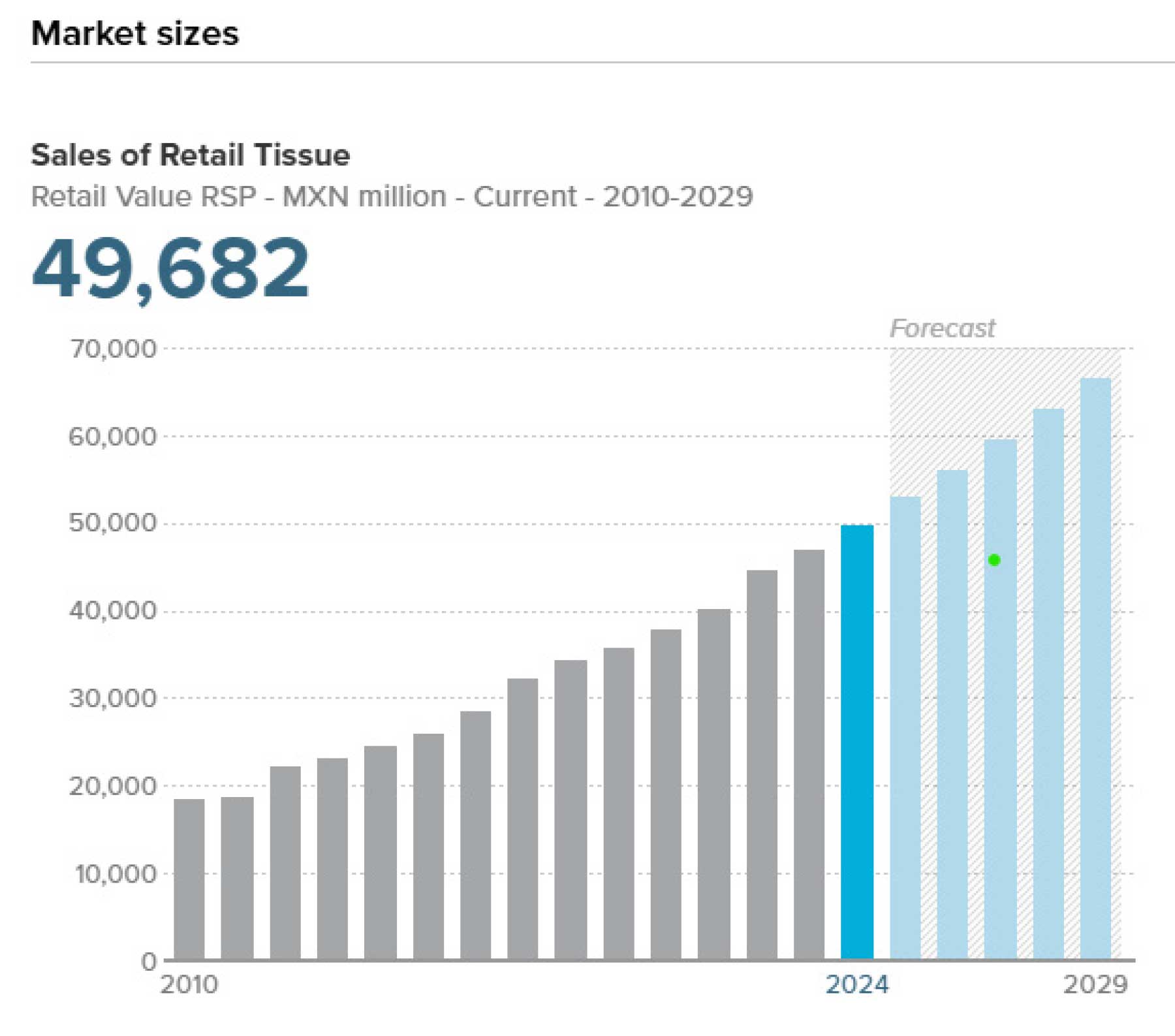
- Retail value sales increase by 6% in current terms in 2024 to MXN49.7bn
- Paper towels is the best performing category in 2024, with retail value sales rising by 8% in current terms to MXN10.9bn
- Retail sales are set to grow at a current value CAGR of 6% (2024 constant value CAGR of 3%) over the forecast period to MXN66.5bn
- 2024 developments: Toilet paper and paper towels drive growth as premiumisation is seen
Retail tissue experienced sustained growth in current value terms in Mexico in 2024, although volume growth was more moderate. Paper towels was the best-performing category, registering value growth two percentage points above the average for retail tissue. In contrast, napkins showed a weaker performance, growing two percentage points below the average, and seeing volume decline, indicating a trend amongst consumers of replacing napkins with products which are perceived as more premium, such as paper towels. Toilet paper also recorded solid growth, in line with the overall trend in retail tissue. Within facial tissues, both boxed facial tissues and pocket handkerchiefs recorded only modest, below-average increases.
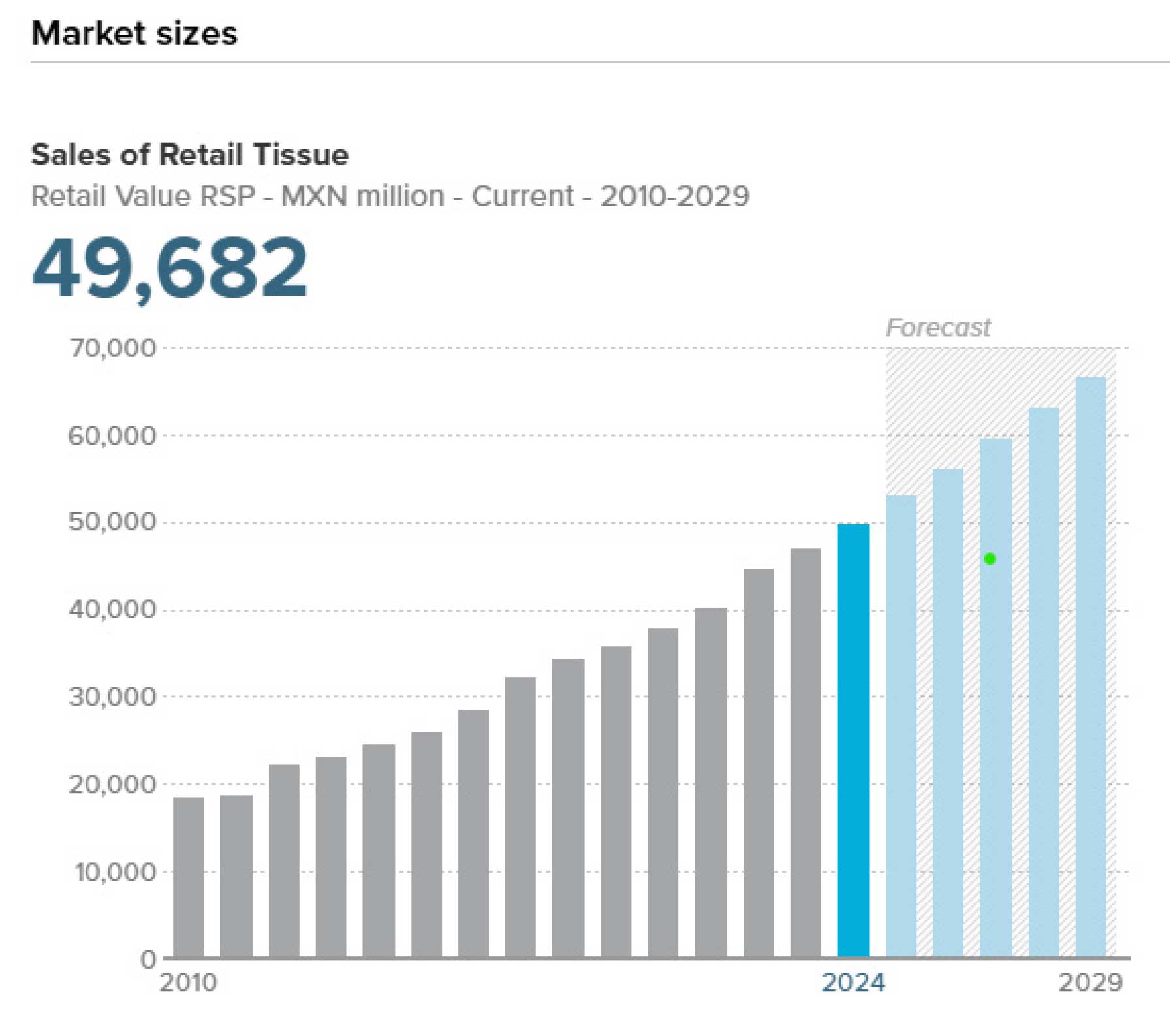
Toilet paper remained the largest category within retail tissue in value terms in 2024, followed by the category that experienced the most significant growth, paper towels. Both grew partly thanks to the premiumisation trend, as consumers had higher purchasing power in a context of economic acceleration, and looked for added value in their consumption. The rise of premium-driven consumption can be seen in the growth of premium private label lines. In addition, growth of paper towels was seen at the expense of napkins, as the former are regarded as premium products. The perception that paper towels are more hygienic, durable, and versatile than napkins has driven this trend. Similarly, in toilet paper, premium products with differentiating attributes, such as greater softness, pleasant fragrances, and double-ply technology, have gained popularity. The premiumisation of consumption represents a key opportunity for manufacturers, which can develop products with innovative and attractive features for consumers.
Grocery retailers continue to dominate
The main distribution channels for retail tissue products in Mexico in 2024 were grocery retailers such as supermarkets, hypermarkets, discounters, and small local grocers. Grocery retailers have an extensive reach, affordability, and benefit from the strong consumer preference for in-person shopping. Major retail chains dominate the market, offering a wide variety of brands and private label alternatives at competitive prices. These outlets attract a high number of shoppers who rely on bulk purchasing and frequent promotions, making them the go-to choice for household essentials such as toilet paper, paper towels, and napkins. Consumers in Mexico value the ability to compare products directly, assess the quality, and take advantage of in-store discounts, reinforcing the importance of physical retail.
Private label retail tissue products from major grocery retailers have gained significant share by offering cost-effective alternatives to established brands. This has intensified the competition, pushing leading manufacturers to introduce innovative, premium, and eco-friendly products to differentiate themselves. Most tissue purchases remain habit-driven, and are made through traditional store-based retail channels. Grocery retail channels ensure a steady supply of tissue products across both urban and regional markets, solidifying their role as the dominant sales channels in retail tissue in Mexico.
However, other non-grocery retailers saw the highest growth in 2024, although from a low base. In addition, over the review period retail e-commerce gained traction from a low base, especially in paper towels, in which it accounted for 5% of sales in 2024, and continued to trend upward. In other categories, e-commerce is growing at a more moderate pace. Although traditional retail outlets remain dominant, online sales have become increasingly important. The convenience offered by digital platforms, along with exclusive promotions and subscription options for recurring purchases, has fuelled this trend.
Prospects and opportunities: Paper towels will continue to drive growth due to innovation and premiumisation
Retail tissue in Mexico is expected to maintain retail volume and current value growth throughout the forecast period, although performances will vary across categories. The largest category, toilet paper, is anticipated to continue to see relevant growth, driven by the pursuit of softer fabrics and products that are perceived as premium. In addition, following the skin care trend and the rising demand for ingredient-based products, it is expected that facial tissues will show organic growth in the forecast period. Retail tissue therefore presents various growth opportunities in the short and medium term.
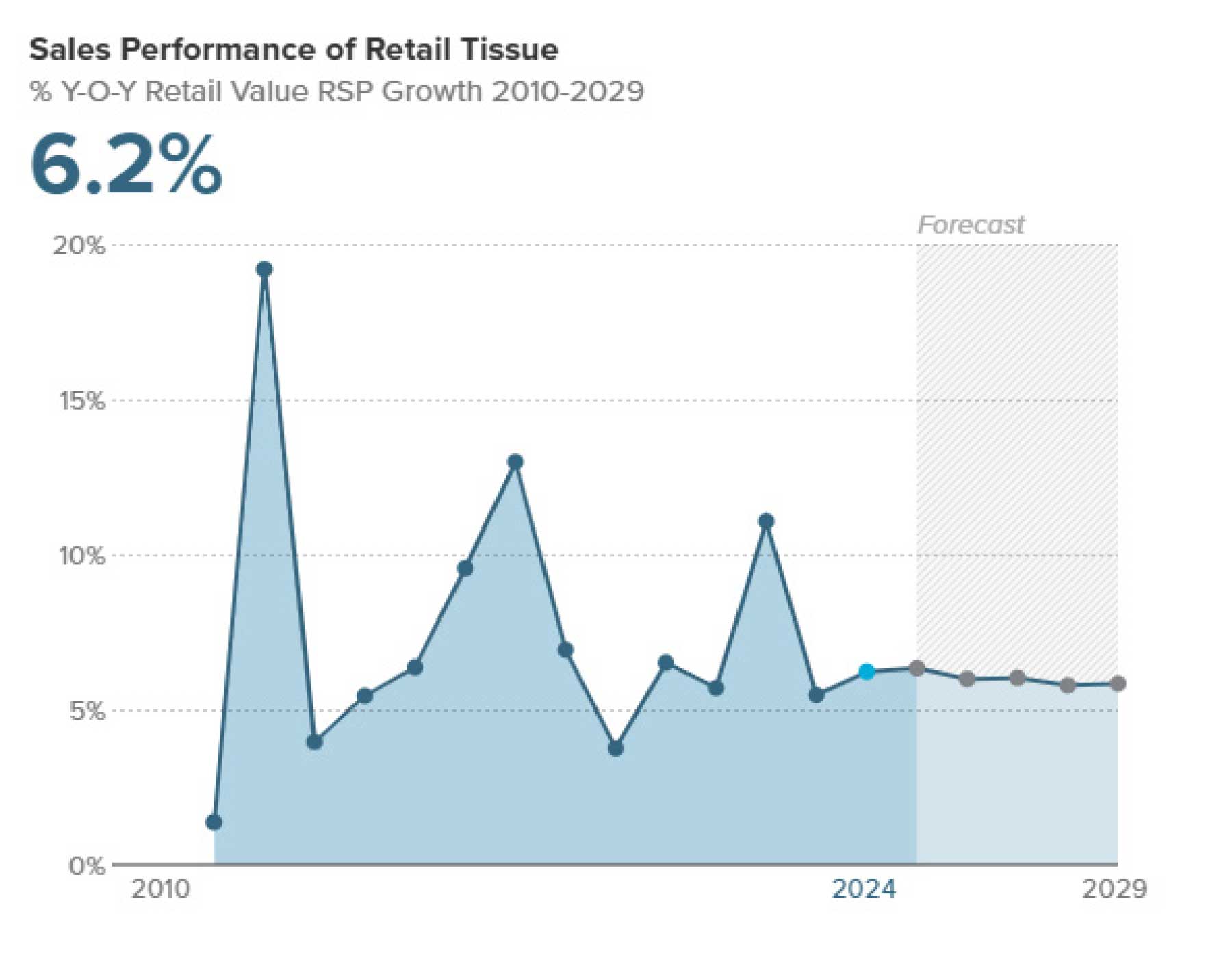
However, it is expected that paper towels will continue to be the strongest driver of growth in retail tissue moving forward, seeing the highest current value increase in the forecast period. This is due to the versatility of this product, as it can substitute napkins, but also reusable cloths and other cleaning alternatives, and usage is expanding beyond traditional tasks. The premiumisation of consumption is also allowing for the creation of products with innovative attributes that justify higher prices and foster consumer loyalty. For instance, consumers perceive paper towels as more hygienic and durable than napkins, reinforcing their preference for everyday use in kitchens, workplaces, and public spaces. Innovations in this category in terms of absorbency, eco-friendly materials, and packaging convenience will support expansion, making paper towels an essential product in both residential and commercial settings. Moreover, the growing influence of e-commerce will enhance accessibility, with subscription models and bulk purchasing options driving higher consumption. As private label lines introduce competitive alternatives and manufacturers continue to refine product quality, paper towels will maintain its position as the fastest-growing category in retail tissue.
Opportunities in expanding online sales strategies
Players have the opportunity to expand their online sales strategies and reach a broader audience with flexible business models, such as subscriptions and scheduled deliveries. Companies that strengthen their online presence through digital marketing strategies, improvements in the user experience, and optimisation of delivery logistics, will be able to capitalise on the opportunity of retail e-commerce and improve their shares. Nevertheless, with the strong position of grocery retailers in 2024, players will also have to maintain their focus on offline retail. Competition with private label, while challenging, also represents an opportunity for established brands to strengthen their positioning through more targeted and differentiated marketing campaigns.
Innovation in products, packaging and distribution expected
Innovation is expected to be a key driver of growth in retail tissue over the forecast period, particularly as premiumisation continues to shape consumer preferences. Manufacturers will have to focus on developing high-quality products with enhanced features, such as improved softness, greater absorbency, and sustainable materials. Consumers are increasingly seeking added value in their purchases, favouring biodegradable, hypoallergenic, or scented tissues that offer a superior experience. At the same time, and although gradual, the rise of private label is intensifying the competition, requiring established players to refine their strategies. To maintain their positions, leading companies will need to invest in research and development, leveraging advanced manufacturing technologies to optimise costs while maintaining superior quality. Sustainability will also be a crucial factor, with eco-friendly innovations such as recycled materials, reduced plastic packaging, and carbon-neutral production playing a central role in brand differentiation.
The expected expansion of retail e-commerce further highlights the need for innovation in terms of distribution and marketing strategies. Digital platforms provide brands with opportunities to engage consumers through personalised experiences, subscription models, and customised packaging. In addition, advances in logistics and automation will improve supply chain efficiency, enabling faster deliveries and reducing operational costs. Innovative packaging designs, such as compact or resealable formats, will enhance consumer convenience, making online purchases more attractive. As the competition intensifies, companies that integrate high-value innovation in various areas will be best-positioned to lead retail tissue in the coming years.
Executive summary: Tissue and hygiene in 2024 – the big picture
Tissue and hygiene saw growth in Mexico in 2024, with increases for both the retail and AfH channels, following the inertia the Mexican economy showed since 2023. In macroeconomic terms the country experienced a year of growth, driven by the arrival of foreign investments, the consolidation of the middle-class, a historically low unemployment rate, increased purchasing power, accompanied by a strong Mexican peso against the US dollar. However, throughout 2024 economic growth began to decelerate, mainly due to the uncertainty generated by the presidential elections in June. Despite this context, domestic consumption demonstrated resilience, mitigating the effects of the slowdown.
The deceleration of the economy resulted in some consumers exercising greater caution in their spending habits. However, this caution did not necessarily led to lower spending, but rather a transformation in consumption patterns. Consumers increasingly sought products which provided better value for money, prioritising premium items over lower-cost alternatives. This trend was particularly evident in retail tissue, in which demand for higher-quality paper towels increased compared with napkins.
Inflation, while under control, remained a challenge for the industry, influencing cost structures and pricing strategies. While over 2024 inflation levels gradually decreased to the range set by the central bank, cost pressures remained a concern for both consumers and businesses. Inflation particularly influenced price-sensitive categories such as menstrual care, in which promotional activity played a crucial role in driving sales. The competition in this category remained fierce, with companies relying heavily on discounts, multi-pack promotions, and value-added incentives to retain customers. In this context, companies will have to maintain a balance between competitiveness, innovation, and sustainability to ensure growth in the medium and long term.
2024 key trends
Mexico’s demographic transformation continues to impact the dynamics in tissue and hygiene. For instance, both retail and AfH adult incontinence showed solid current value growth in 2024. The population aged 65+ continues to grow in Mexico, and with incontinence being more prevalent amongst this consumer group, demand for adult incontinence products therefore increased. However, growth was fuelled not only by demographic shifts, but also by changing cultural attitudes, which have reduced the stigma around these products. Consumers have started to prioritise products with greater softness and functionality, which has driven innovation in these categories. Companies have innovated with features such as enhanced absorbency, greater comfort, and environmentally-friendly materials to attract consumers.
It was wipes which saw the strongest current value growth within tissue and hygiene in 2024. Within wipes, products related to personal care, such as facial cleaning wipes and moist toilet wipes, showed double-digit value growth, influenced by the growing concern for skin care in Mexico. In addition, general purpose wipes experienced double-digit growth. This shows that cleaning habits which developed during the pandemic have become normalised.
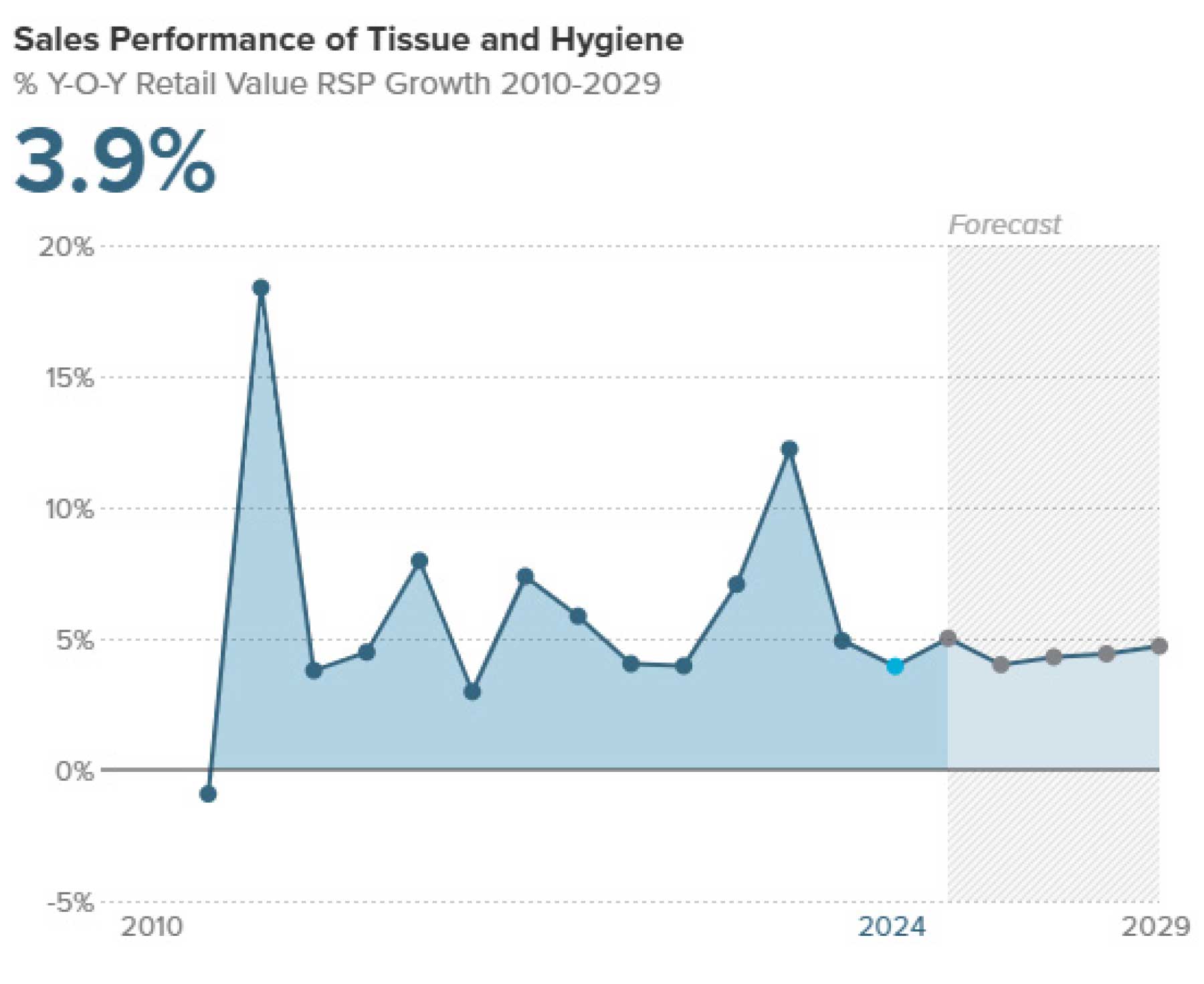
In addition, retail tissue experienced significant growth in 2024. There was clear growth of paper towels at the expense of napkins. The behaviour of Mexican consumers evolved in response to economic changes, with a trend not necessarily towards the cheapest products, but towards those that offer greater value for money. A clear example of this was the increased consumption of paper towels at the expense of napkins, reflecting a search for greater efficiency and quality in hygiene products. Meanwhile, toilet paper also showed strong dynamism.
Sustainability remains a critical issue in tissue and hygiene, not only due to end-user concerns, but also due to the resource-intensive nature of manufacturing tissue and hygiene products, particularly in terms of water consumption. Companies have increasingly engaged in sustainability campaigns, promoting the reduction of water use in production, and supporting water conservation initiatives in local communities. These initiatives not only improve brand perception, but also align with the growing consumer demand for environmentally-responsible products.
Competitive landscape
The tissue and hygiene industry in Mexico is highly competitive, with the strong presence of established players and a minor – but increasing – participation of private label.
Given the stronghold of major players, many companies have invested in corporate social responsibility and sustainability initiatives to strengthen their positioning while solidifying brand loyalty. The high level of competition has led companies to focus on aggressive marketing and promotional campaigns.
Strategies such as bundle offers, bonus packs, and discounts during key promotional periods, including major retail events. The competitive landscape also reflects a strong shift towards e-commerce, which has gained traction as a preferred purchasing channel.
The premium private label segment has also grown, with private label players launching high-end lines to compete with traditional products. This increase is dominated by brands from supermarket chains. This growth is largely relevant in toilet paper, in which the premiumisation trend is noticeable through differentiation in quality through attributes such as increased softness or resistance. Despite these advances, the ability of private label to compete in the premium segment remains limited, as consumers usually associate well-established national and international brands with quality.
Retail developments
Hypermarkets was the leading distribution channel within retail tissue and hygiene in 2024, accounting for almost a quarter of value sales, and was closely followed by discounters and supermarkets, together accounting for more than 6% of value sales. Many consumers purchase tissue and hygiene products along with their weekly shopping. Supermarkets and hypermarkets saw above-average growth in 2024, driven by commercialisation strategies that focused on promotions and discounts, with a key role played by events, when companies invested in promotional packs and value-added offers to maintain their shares. However, other non-grocery retailers and vending saw the most dynamic growth, although from a very low base.
Although seeing little share movement in 2024, e-commerce expanded strongly in Mexico in the review period, driven by greater digitalisation and consumers’ adoption of online shopping habits. Companies in tissue and hygiene have strengthened their presence on digital platforms and optimised logistics to meet the growing demand in this channel. The shift towards e-commerce has also been supported by broader internet access, improvements in logistics, and the growing trust of consumers in digital transactions. Companies are leveraging this shift by offering exclusive online promotions, subscription-based purchasing models, and personalised marketing to increase customer loyalty.
What next for tissue and hygiene?
Tissue and hygiene in Mexico is set to continue to see retail current value growth throughout the forecast period, with increases for both retail and AfH tissue and hygiene, with one of the major factors impacting sales being the rising population. It is expected that facial cleansing wipes will see the strongest growth rate, following the trend seen regarding rising consumer demand for skin care products in Mexico. In fact, overall wipes is anticipated to experience dynamic growth, as new cleaning habits continue to take hold amongst consumers in the country. Meanwhile, sustainability will remain a key differentiator, although the adoption of such products will largely depend on maintaining accessible prices for consumers.
Demographic changes are expected to remain relevant in the tissue and hygiene industry in Mexico. For example, retail and AfH adult incontinence are expected to see dynamic growth rates, due to the ageing of the population and rising number of people in the country aged 65+. Meanwhile, nappies/diapers/pants is set to see only marginal growth, due to the falling birth rate. Euromonitor International estimates that by 2029, the birth rate in Mexico will have fallen to 13.32 babies per 1,000 people. This signals the need for stakeholders to prepare strategies to diversify their product portfolios.
Looking ahead, retail e-commerce is expected to see growth, consolidating as a strategic distribution channel for the industry. The increasing digitalisation of retail is expected to further transform consumer behaviour, making e-commerce a critical component of distribution strategies. Additional digital strategies may involve subscription services, and direct-to-consumer sales models will likely gain traction as companies seek to strengthen customer relationships and ensure recurring revenue streams.