




















A third of global consumers are concerned about finances. Personal and environmental health is increasingly viewed as a vital asset. Natalia Bezrebra, Senior Analyst at data analytics company Euromonitor International, says for the industry in a complex market clearly defined product positioning and effective messaging about specific benefits are essential.
In recent years, awareness of the vital connection between a healthy environment and human well-being has grown considerably. This momentum is fuelled by government regulations, corporate sustainability strategies and rising public concern for the planet and future generations.
This awareness is translating into consumer behaviour, particularly when it comes to purchasing decisions that reflect personal values. To explore this dynamic, we turn to insights from Euromonitor International’s annual Tissue and Hygiene research: the Voice of the Consumer surveys and Sustainability: Claims tracker, which provides insights on how evolving consumer lifestyles priorities and sustainability perceptions are shaping consumer choices of tissue products worldwide and where future opportunities lie.
Our findings highlight that consumer demand for tissue is evolving in response to shifting life priorities – there is a growing focus on one’s self and wellbeing, also beneficial for demand on sustainable tissue products, a preference for convenience and added value, well met with current innovations and more responsible purchasing decisions with consumers aiming to get the best for the money they can spend.
Retail Tissue – established but still prospective industry
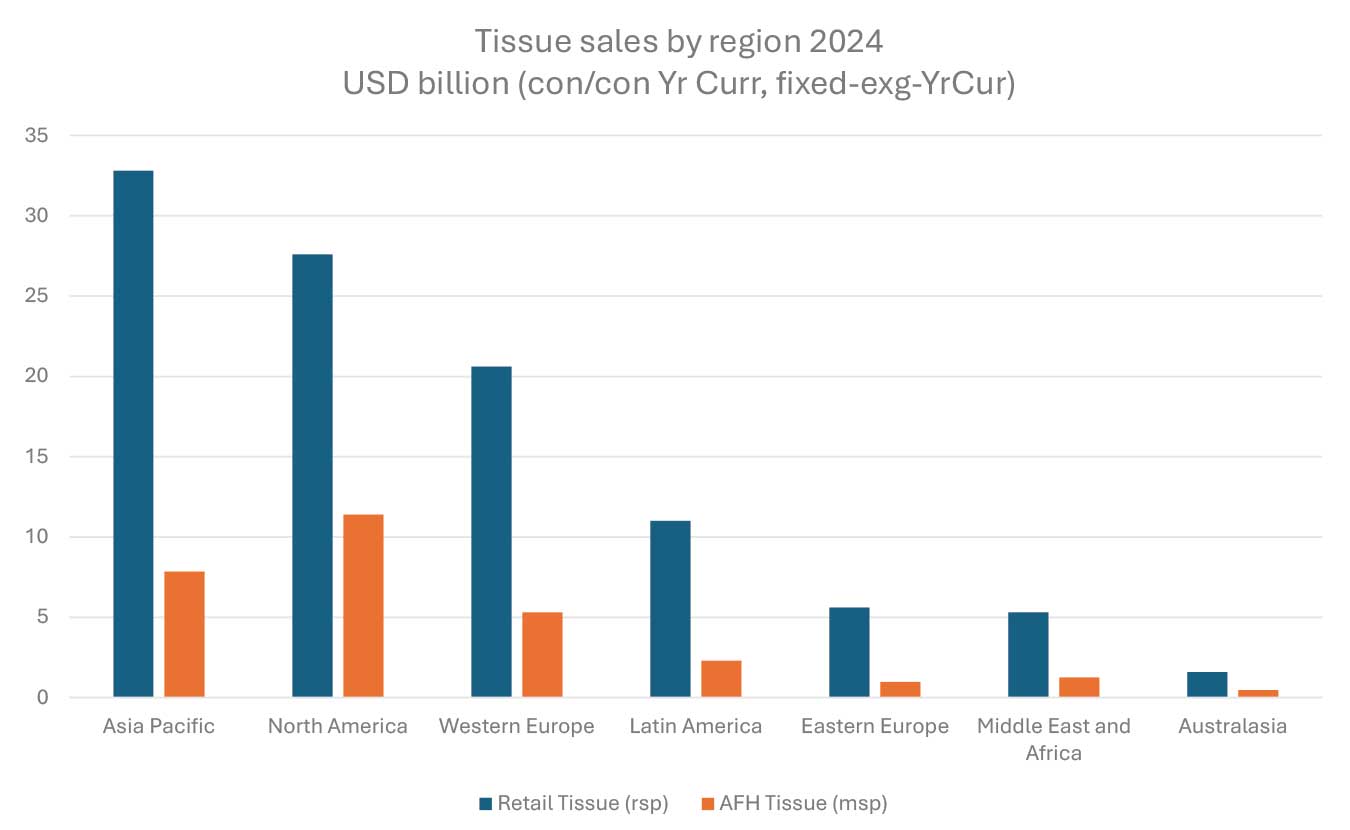
Tissue products are among the most regularly used items by most consumers globally. In 2024 retail tissue industry generated $105bn, projected to grow further to $107bn in 2025. AfH Tissue has a smaller share with $30bn (msp) value in 2024 forecast to grow by 2% over 2025.
The highest value consumption of retail tissue products comes from Asia Pacific, which is followed by North America and Western Europe with the rest of the regions making less significant contributions to the category. At that, the ratio of retail tissue and AfH tissue varies across the regions with AfH tissue the highest in share in North America (29%) and the lowest in Eastern Europe (15%).
Tissue products have become an indispensable part of daily life due to their essential nature. However, the regional differences and the split between retail and AfH distribution highlight the significant importance of additional factors on consumer demand. These factors include financial, demographic and cultural characteristics specific to different countries and regions.
Economic pressures drive more mindful spending on essential products
In 2025, the global economic situation continues to face challenges driven by geopolitical tensions, most notably Russia’s war in Ukraine, and the uncertainty surrounding Trump’s international policies. These factors have impacted disposable incomes for many consumers, as well as their confidence.
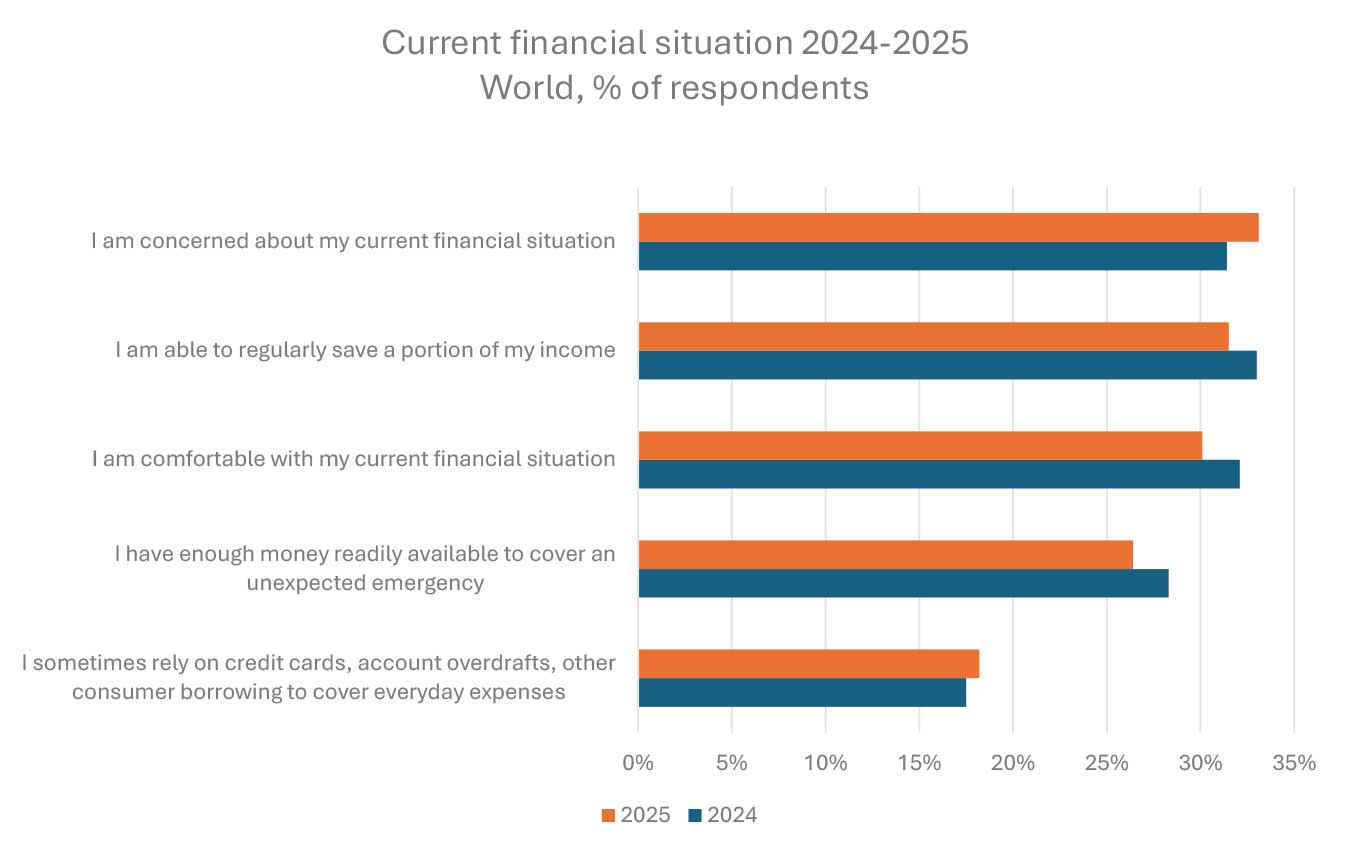
According to the findings of Euromonitor International from Voice of the Consumer: Lifestyles Surveys conducted in 2025, 33% of global consumers are concerned about their current financial situation while 18% occasionally rely on credit cards and similar forms of borrowing. The share of such respondents has increased in 2025 compared to 2024. In contrast, the proportion of consumers who can regularly save a portion of their incomes has reduced, which is also true of those respondents who are comfortable with their current financial situation.
As a result, people are being compelled to adjust their lifestyles and attitudes to better navigate the shifting realities with greater efficiency and resilience. Many are re-evaluating their life priorities, spending habits and their relationship with the world around them. Additionally, factors such as population ageing, increasing life expectancy and growing urbanisation further reinforce the need for these lifestyle changes.
Rising priority: personal wellbeing and self-focus
In this context, health is increasingly viewed as a vital personal asset. People are investing more time and money into activities that help prevent health issues, maintain social and physical activity and enhance emotional wellbeing. The rapid expansion of educational content on social platforms like TikTok and Instagram is accelerating these trends.
Self-focus in another evolving trend. According to Euromonitor’s Voice of consumer: Lifestyles Survey 2025 (n:40,337), “Time for myself” was selected by 51% of respondents as a top life priority, followed by “Time with partner of spouse” (48%) and “Time with children (39%). Time for myself and nurturing family are a priority and thus people are more selective as for activities, especially home chores, resorting to products which make daily chores simplified and more convenient to perform. Tissue products perfectly meet the criteria since they are disposable and allow for convenience and multi-functionality.
Integrating personal health and wellbeing with planetary responsibility
Consumers are increasingly aware of the connection between their personal wellbeing and the health of the planet. Natural resources such as clean water, air and soil are essential to maintaining good health and environmental concerns are becoming more central to consumer values. As lifespans increase, people are putting greater effort into preserving their health and appearance over time.
In fact, 45% of consumers associate beauty with looking healthy, according to Euromonitor’s Voice of the Consumer: Health and Nutrition Survey 2025 (n:21,207). Healthy living is now widely understood to depend not only on personal habits but also on the quality of the surrounding environment, both social and natural. This growing awareness is driving interest in sustainable practices and products that support both individual and planetary health.
Sustainability in consumer behaviour and packaging preferences
In 2025, 62% of consumers reported being worried about climate change and 61% of them actively try to make a positive environmental impact through their daily actions. To be sustainable, consumers consider sustainable packaging as a way to reduce environmental harm. Recyclable packaging and biodegradable packaging are top packaging types associated with such packaging type by most of the respondents, 49% and 45% of those polled respectively. Paper packaging is selected as such by 35% of the respondents.
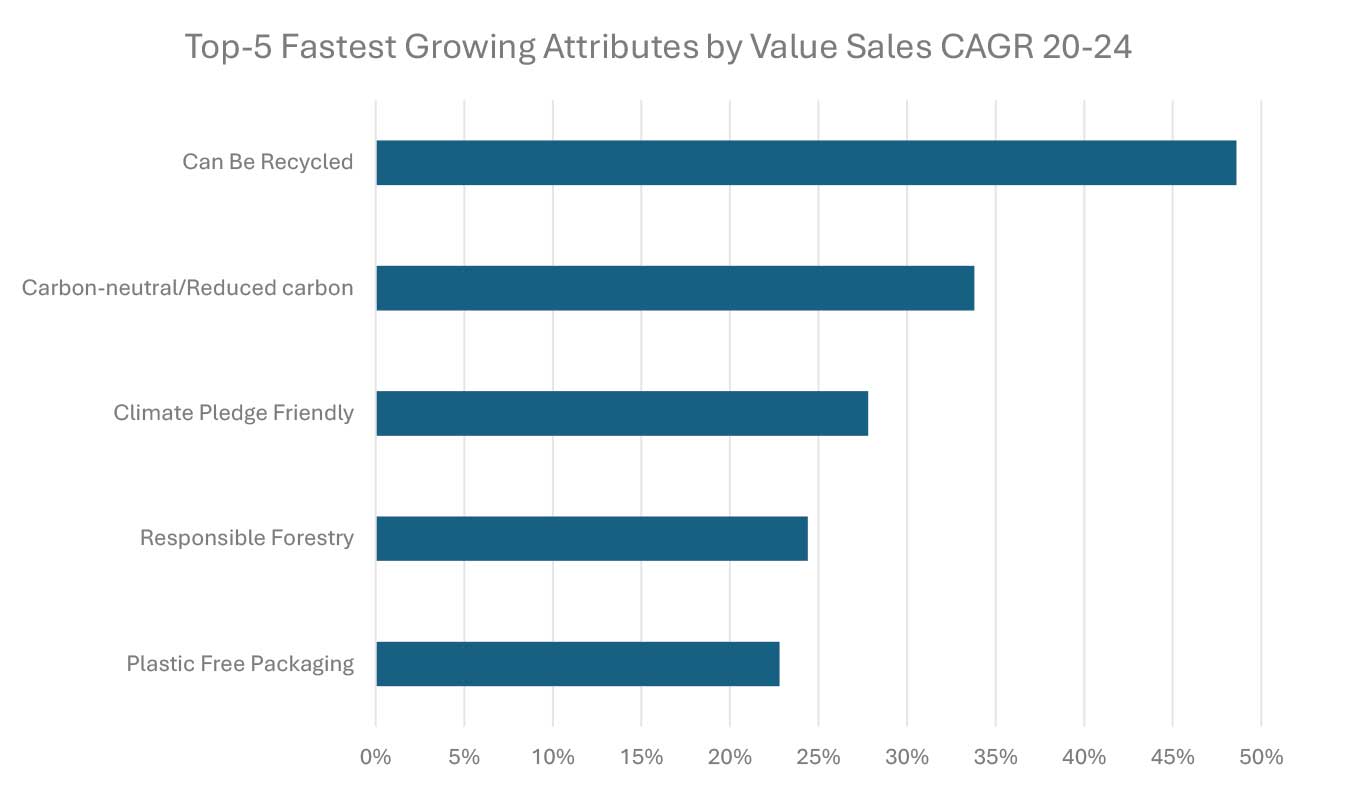
Data on sales of tissue and hygiene products with sustainability attributes found that Natural, Environmentally-Friendly and FSC-certified were ranked as the top-three in 2024. The fastest-growing attribute by value sales comprised Can Be Recycled, rising at 49% CAGR over 2020-2024.
The tissue industry has been actively responding to the growing demand on sustainability, with numerous product innovations launched in recent years across various countries. Tissue products are often viewed as relatively environmentally friendly due to their disposable nature, especially when compared to materials like plastic. This perception, combined with ongoing efforts to introduce sustainability attributes, reflects the industry’s commitment to aligning with evolving consumer expectations.
Innovations in tissue – strong focus on added value and sustainable features
Looking at the most recent innovations in tissue, it is possible to summarise the developments in several directions. First, sustainability is a key focus, with new products featuring FSC certification, made from recycled and alternative source materials (eg, bamboo, straw) and tissue packaged in biodegradable materials. For instance, Portugal’s The Navigator Company introduced its toilet paper Amoos Comfort (with softness achieved through Air Comfort Plus cushioned texture) and Amoos Naturally Soft in paper packaging. The latter is made with patented Natural Soft Fibre technology using 100% virgin fibre without chemical bleaches, further shaping its added value.
Cross-category innovations are also being explored, particularly those that blur the boundaries between tissue and personal care. For example, Kruger Products launched Scotties Ultra Soft Ultra Doux with Lotion facial tissues in Canada, featuring in a large tissue size. The products are hypoallergenic, have premium thickness (three-ply) and are infused with aloe and vitamin E.
At the same time, private labels – well-positioned during economically challenging periods – are expanding further with innovations increasingly entering the premium segment to meet the needs of the most demanding consumers. This includes improved functionality, sophisticated design and more convenient or sustainable packaging. Sustainable and cross-category innovations are actively explored by private label players too, further adding to their assortments’ competitiveness.
Such multi-directional innovations in tissue are making consumer choices more complex. For manufacturers to succeed, clearly defined product positioning and effective messaging about the specific benefits of their offerings are essential, especially as budgets tighten and consumers make more careful and considered decisions, particularly when it comes to daily necessities like toilet paper, kitchen towels or napkins.
Balancing consumer priorities with financial realities: overcoming barriers to purchasing sustainable tissue products
So what can be done to stimulate healthy consumer demand on added value and sustainable tissue in future, while there is no evidence of global stabilisation and the future looks uncertain? Two key directions stand out.
First, product assortments must be tailored to meet diverse consumer needs, considering factors such as age, usage purpose, cultural specifics and financial status. Offering products in various size formats can help ensure affordability per purchase. The needs of single-person households should be considered too, along with experimenting with sheet sizes to better suit budget-conscious consumers, especially since sustainable options may not always be price competitive.
Packaging of tissue products should also reflect the rise of e-commerce, with formats that are both convenient for transport and appealing to consumers. Retail e-commerce’s share in retail tissue distribution grew from 9% in 2019 to 17% of retail sales value in 2024. This growth highlights the need for packaging that is specifically designed to meet the logistical demands of online retail, ensuring products are easy to ship, store and handle, while remaining affordable and convenient for consumers to purchase.
Success depends not only on understanding regional demographics and income levels but also on recognising the specific realities of individual countries. For example, in markets where consumer incomes are relatively low, toilet paper may be used for a wider range of purposes, often substituting more expensive products like paper towels. This behaviour can significantly influence per capita consumption patterns. To succeed in such environments, manufacturers must adopt localised strategies that are responsive to evolving conditions and tailored to the unique needs of each market.
Second, clear and compelling messaging is essential. Consumers need to understand the unique benefits of each product, whether it is texture, format or functionality. This helps manage expectations and guide informed choices. At that, it is good to support such messaging with real stories about the brand so that consumer trust is enhanced. If to specifically consider the results of Euromonitor’s Understanding of Green Labels/Trust in Labels (n:39,533), trust in sustainability labels has slightly declined. In 2025 the label “Recyclable” is considered trustworthy by 57% of consumers, reducing in share compared to the previous four years in a row. Environmentally conscious or eco-friendly labels were trusted by 51% (somewhat reducing compared to 2024) and “Sustainably produced” by 47% (down from 50% in 2024). These figures highlight the importance of backing sustainability claims with clear, factual communication to reinforce consumer confidence in such products.
Adding an emotional element to communication can also be effective as people increasingly seek positive experiences from the products they buy.
As the population continues to age, simple and clear labelling will become increasingly important, especially for older consumers who appreciate straightforward information. Launching products tailored to specific consumer groups – such as children, men or women – can also help address diverse needs while adding a sense of personalisation. This targeted approach not only enhances product relevance but also strengthens consumer engagement by showing that their unique preferences and lifestyles are being considered.
While many people are currently more focused on their personal wellbeing than on external causes like environmental protection, in the nearest couple of years messaging would be better to reframe to connect sustainability with individual health and comfort. For example, highlighting that sustainable products are free from chemical dyes, made from softer alternative materials that are gentler on the skin or designed to perform more tasks per sheet – even if they appear more expensive at first glance – can shift the narrative. By focusing on “what’s in it for me”, manufacturers will be able to better engage consumers and simplify the path to adoption of innovative and sustainable tissue products.