




















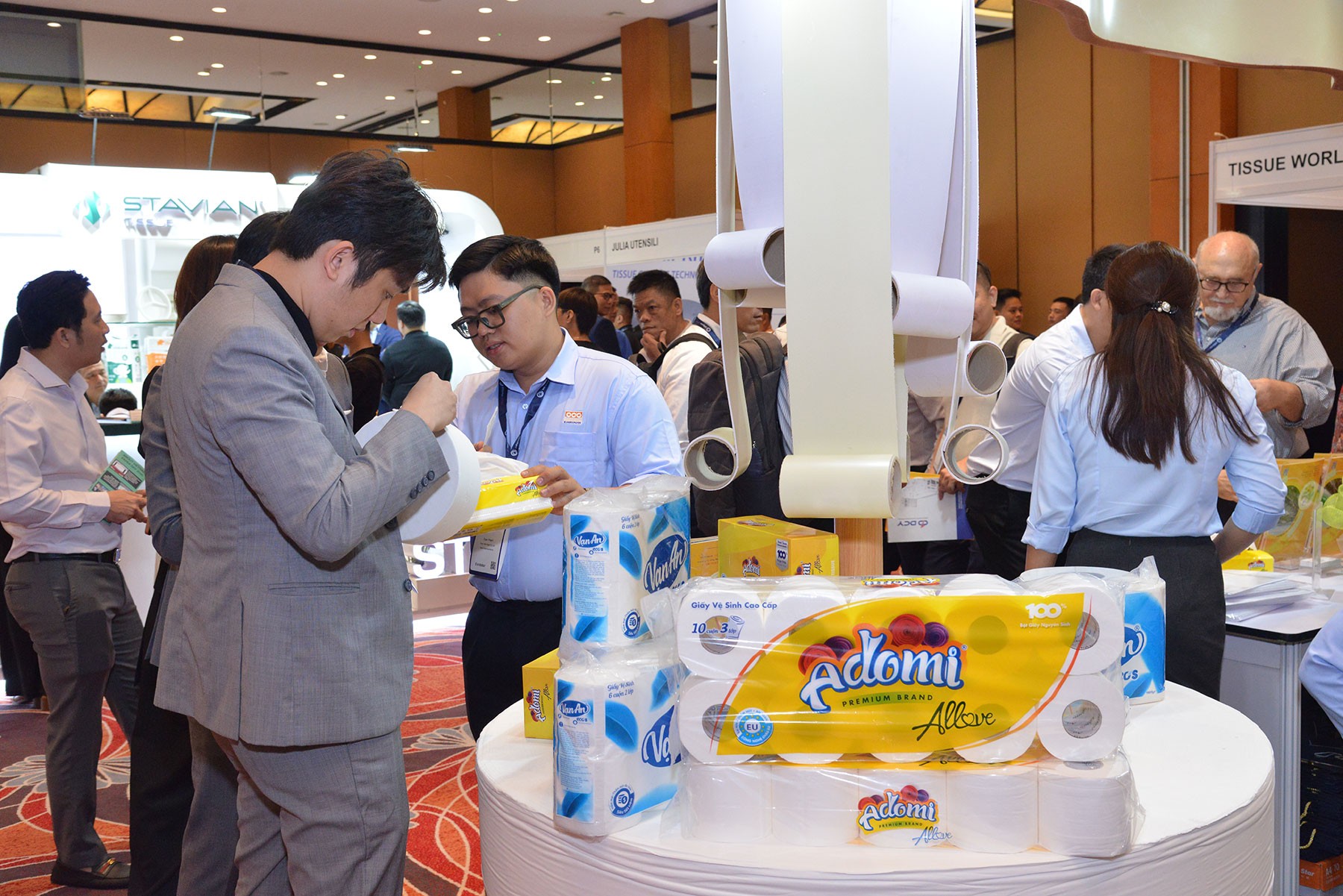
At Tissue World Ho Chi Minh City in November, Natalia Bezrebra, Senior Analyst at data analytics company Euromonitor International, gave a presentation detailing regional trends in retail tissue across APAC. A summary of the talk is outlined below.
Retail tissue and hygiene: undoubtedly essential
By looking at where retail tissue and hygiene ranks within overall consumer spending across the industries (we use constant value data, that excludes inflation), we can focus on real demand by removing the impact of changes.
Unsurprisingly, food remains in the lead. While some industries have seen strong growth in recent years, others have been more stagnant. Global uncertainty and geopolitical tensions have encouraged many consumers to prioritise well-being and emotionally driven purchases. As a result, we see healthy growth in travel, for example.
Retail tissue and hygiene is not among the largest ones but shows positive dynamics: as these products are widely considered essential by consumers, and increasingly appeal with convenience, they are being driven by innovations and consumer focus on hygiene.

Retail tissue at a glance in 2024: Asia Pacific in the lead
Global retail tissue sales reached $105bn in 2024. The industry grew by 1% in constant terms, which is slower than the 3% growth recorded in 2023.
In current terms, the industry was up by 5%, slowing down compared to nearly 8% of 2023.
In 2024, Asia Pacific accounted for around a third of global retail tissue sales. It posted 2% growth at constant prices, supported by rising demand in markets such as Sri Lanka, Philippines, and Pakistan.
North America had flat dynamics, also slowing compared with 2023, and reached $28bn. Demand was stronger in Canada, while in the US the category faced challenges such as higher supply costs and shrinkflation, which led to a less dynamic current value growth than in 2023.
Western Europe experienced a negative performance of -1%, largely due to significant declines in some countries including Greece, Türkiye, the UK and France.
Other regions maintained positive momentum, with per capita consumption of retail tissue continuing to rise.
Macroeconomic factors of influence in 2025
In a world of instability, what does the consumer hold onto?
Taking a look at the macroeconomic backdrop shaping consumer demand, including in retail tissue, 2025 has been another tough year for manufacturers, what with the cost-of-living crisis worsened by tariffs and geopolitical tensions.
Early in the year, economic uncertainty surged following policy changes as Donald Trump returned to the US presidency. New tariffs on multiple countries took effect on 7 August, signalling a major shift in global trade and raising the risk of a trade war.
Geopolitical conflicts and the war in Ukraine and the Middle East continue to threaten stability, disrupt supply chains, and push inflation higher, slowing growth.
Extreme weather events add further risks.
These developments are prompting consumers to rethink and adjust their lifestyles to feel more secure in a changing world.
Navigating tough times: the consumer’s financial landscape
- 36% of consumers in APAC are able to save a portion of their income vs 32% globally
- 33% of consumers in APAC are comfortable with their financial situation (30% – global results)
- 33% of APAC respondents expressed concern about their financial situation, in line with global results.
As a result of ongoing economic pressures, many people feel uncertain about the future. They are becoming more cautious with their spending, often avoiding purchases that are not considered essential.
To better understand these shifts, we conduct annual Voice of the Consumer surveys.
Our latest survey indicates that in 2025, more than 30% of participants expressed concern about their current financial situation. Fewer people feel financially secure, and fewer can save regularly.
At the same time, more individuals are relying on financial support from family, friends, or government programmes.
This cautious mind-set is directly influencing consumer behaviour, including demand for retail tissue products.
Retail tissue in Asia Pacific: growing and dominated by toilet paper
When we look at the broader performance of retail tissue in Asia Pacific, value sales show stable and uninterrupted growth.
Retail tissue products have become highly essential, supported by ongoing developments in the industry, particularly new product innovations and a strong focus on convenience, which continue to drive demand.
Toilet paper and boxed facial tissues remain the most popular products among consumers, thanks to their universality and ease of use.
China: the biggest top-10 contributor within Retail Tissue in APAC
- 3.5% – CAGR in Asia Pacific over 2019-2024
- 6.2% – The most dynamic historic CAGR in Vietnam
- 1.6% – The least dynamic historic CAGR in Japan
Looking at specific countries in the region, China continues to show the highest demand for retail tissue. In 2024, both volume and value grew steadily, supported by essential use in households, lower pulp prices, reduced cost pressures, and evolving consumer preferences.
For comparison, Vietnam ranks fifth in terms of value sales. Retail tissue value sales grew strongly in 2024, supported by rising incomes and improved living standards. Consumers are increasingly opting for specialised products such as facial tissues and napkins. Among Asia Pacific markets, Vietnam posted the most dynamic growth, while Japan saw the weakest performance, with a historic CAGR of +1.6% in constant terms.
Japan continued its downward trend in volume terms being influenced by factors such as population decline, less time spent at home, and lower pollen levels compared with 2023.
Boxed Facial Tissues much favoured in Asia Pacific
Comparing global retail tissue by category, we see that toilet paper generates approximately the same share both globally and regionally, at around 60% of retail sales value.
A contrasting difference comes from paper towels and boxed facial tissues use.
Globally, paper towels is the second most popular category whereas in Asia Pacific it contributes only 4% of the category’s sales value. In contrast, in Asia Pacific boxed facial tissues has a much stronger appeal, in charge of 30% of the total value sales, compared to 15% of the global sales value.
Boxed facial tissues are favoured for their added-value, more recently enhanced with innovations in facial tissues with lotion and skin-friendly materials. Overall, boxed facial tissues is the most dynamically growing category, with historic CAGR of 6.8% over 2019-2024.
Paper towels has also been booming recently – it follows boxed facial tissues with 6.4% CAGR. Paper towels use is expected to expand as currently they appeal for kitchen cleaning, baby care, and travel. Manufacturers attract launching new products designed for specific purposes, eg, harder cleaning tasks.
Snapshot of Vietnam’s retail tissue market
- 6.2% – CAGR over 2019-2024
- 7.6% – The most dynamic historic CAGR in toilet paper
- 5.2% – CAGR over 2024-2029
- 7.2% – The most dynamic forecast CAGR in napkins
Retail tissue in Vietnam
The category continues to enjoy stable and healthy growth. Its historic CAGR in constant terms comprised 6%.
Toilet paper dominates, in line with global trends. It is a household essential for maintaining basic hygiene and, in some rural areas, often substitutes other tissue types due to its affordability, wide availability, and versatility for various household uses. It is also commonly sold in bulk, making it a cost-effective option for families.
Napkins is the most dynamic in 2024 and over the forecast period. Its strong performance has been driven by growing consumer awareness of the importance of using specialised tissues for dining. As hygiene and convenience become priorities during meals, more consumers are choosing napkins designed specifically for eating.
Retail tissue preserves health growth potential in future, and the forecast dynamics are anticipated to be not so much lower than the historic one, at 5% CAGR by 2029.
APAC consumer realities: what shapes tissue buying today
Looking at what is shaping consumer demand on tissue products, and the key trends of modern consumers of retail tissue are:
- Critically minded and cautious about the future
- Educated and curious
- Digitally engaged
APAC consumers in 2025: key insights from the lifestyle survey
How can we describe modern consumers? They are critically minded and cautious about the future. Current financial and environmental uncertainties shape their purchasing decisions and brand loyalty.
We conduct annual consumer surveys and our findings showed that in 2025 72% of global consumers are concerned that the cost of everyday items they buy is going up. Some 51% believe that in five years they will be better off financially than now, down from 55% in 2024.
Consumers are also educated and curious – they are values learning and open to exploring new formats, innovations and sustainable alternatives. As our survey suggests, 56% of consumers extensively research products and services they consume.
Additionally, they are digitally engaged: as part of their online activities, 35% of respondents buy an item or service 1-2 times a week, and 28% – 1-2 times a month.
Digitally engaged consumers use online platforms to compare, review, and purchase tissue products, especially in urban APAC markets.
APAC consumers of retail tissue in 2025 are also: health and wellbeing focused
Today’s APAC consumers are aspiring to high-quality lifestyles and are convenience-oriented. They are also health and wellbeing focused – 26% of our respondents choose time for themselves as the core life priority and 75% value real world experiences.
They prioritise hygiene, skin sensitivity, and wellness-enhancing features.
High quality lifestyles and strive for convenience have been increasingly chased too.
Consumers prefer products that simplify routines and are quick and convenient to use, store, and dispose of.
Aiming to save time, 52% of consumers are willing to spend money, and 34% are not ready to compromise on quality of household essentials.
Modern consumers are also environmentally conscious: they are concerned about ecological impact and are interested in recyclable packaging, reduced plastic, and ethical sourcing.
From local brands to online baskets: tissue buying behaviours in Asia Pacific
Demographic shifts and rising living standards:
- 68% are looking for ways to simplify their life
- Local brand loyalty and untapped private label potential:
- 53% only buy from companies and brands that they trust completely
Digitalised lifestyles and the rise of online Retail Tissue shopping:
- 69% shop online not less than once a month
- Innovations as a catalyst with premiumization and sustainability in focus:
- 56% like to try new products and services.
Within retail tissue purchasing patterns, several key trends stand out.
- Consumer demand for retail tissue in Asia Pacific is evolving due to demographic shifts and rising living standards. Urbanisation, ageing populations, and a growing middle class are reshaping household needs, driving demand for higher-quality products and more diverse formats. Our survey shows that 68% of consumers in the region seek ways to simplify their lives and look for products that help them achieve this.
- Then, the region is marked by strong consumer loyalty to local brands. Some 53% of consumers buy only from companies they trust completely. Familiar local brands remain preferred, while private labels are still underdeveloped in many APAC markets.
- Digitalised lifestyles and the rise of online retail tissue shopping is another trend. As digital adoption accelerates, more consumers turn to e-commerce for everyday essentials, including tissue. 69% of consumers shop online at least once a month. Online platforms are reshaping distribution, offering convenience, personalisation, and wider access.
- And, last but not least, is innovation: 56% of consumers like to try new products and services. Innovation is driving category growth, with premium features such as softness, strength, and skin-friendliness gaining traction. Sustainability is also becoming a key differentiator, as eco-friendly packaging and responsibly sourced materials increasingly influence purchase decisions.
Longer lives, higher incomes and social media fuel lifestyle upgrades across APAC: the average Vietnamese consumer, as an example
To fully understand consumer trends, it’s important to pair them with local insights. For example, in highly urbanised markets, consumers value functional, space-saving products with added features. Designing tissue for specific age groups also supports personalisation trends and preferences in packaging and design.
Retail Tissue fragmented in Asia Pacific with local companies highly competitive
- 6% share gain by Royal Golden Eagle in 2024
- 49% share of others, encompassing smaller brands
- 3% generated by private label, with no strong success achieved
Which companies are leading in Asia Pacific?
Local players hold strong positions, and the market remains fragmented.
In 2024, Hengan, APP, and Royal Golden Eagle were the top three. Essity is with a sharp decline, giving way to Royal Golden Eagle, which captured 6% of retail value sales in 2024, having acquired Vinda International from Essity.
Private label ranks among the top players but holds only a 3% share, reflecting the strong appeal of local brands. Still, private label is gaining traction as affordability becomes critical in the current global situation. Retailers are investing in marketing and product development, introducing premium options to compete with name brands. For example, in China, Sam’s Club, Aldi, Freshippo, and Costco are advancing premium yet affordable private-label lines.
Innovation and responsiveness to shifting consumer needs remain key to success in Asia Pacific’s retail tissue market.
Looking at the retail distribution landscape, supermarkets remain the largest channel for retail tissue in Asia Pacific, consistent with global trends. E-commerce ranks second in both, being the most dynamically growing channel overall but its share in Asia Pacific is much closer to supermarkets.
Despite the return of in-store shopping, the convenience of online purchases remains undeniable. Popularity of e-commerce is driven by convenience, wide assortments, competitive pricing, and growing digital engagement. Livestreaming and social commerce are booming in Asia Pacific, combining storytelling, education, and entertainment to attract consumers.
Companies are also adopting e-commerce strategies and forming private-label partnerships. For example, JD partnered with Sichuan Lam Pure Group in China to launch customer-to-manufacturer (C2M) “reverse customisation” private-label products.
Therefore, in today’s digital age, retailers must respond quickly to emerging technologies, which simultaneously influence consumer purchasing preferences.
Innovation: premiumisation and sustainability in focus
Lately, innovations have been a driving force in retail tissue. These products are no longer perceived as trite but rather as solutions which can help people with diverse functions, adding value, compactness, and a pleasing aesthetic look.
New product development has been active in recent years. To note just a few examples: coreless toilet paper, boxed facial tissues with lotion, multi-ply kitchen towels.
We can group innovations development under several categories. First, while consumers are looking for ways to save, there are clear premiumisation signs in private label. Babo kitchen towels from Vanov Group are here to illustrate the trend as they are durable, non-toxic, sustainable and eco-friendly.
Retail tissue products are increasingly functional and multi-functional. Kleenex Supreme soft toilet paper from Yuhan-Kimberly enhances softness with aloe and shea butter lotion.
Bamboo kitchen towels from Chongqing Donsea is one of multiple samples picking on sustainability as another actively evolving trend.
Extra-convenience is also very important, especially since urbanisation is in place and more people are keen on travelling. People need more space at their homes and more compact storage for basic necessity products. Designer solutions, including packaging serving as design elements, and packaging for travelling formats, are further explored.
Looking ahead – so what’s next for retail tissue?
Retail tissue in Asia Pacific:
- 2.4% constant CAGR (rsp) over 2024-2029
- $37bn in 2029
- Retail tissue in Vietnam: $1bn in 2029
- 5.2% constant CAGR (rsp) over 2024-2029
The future of retail tissue will depend on numerous factors, and they will continue to exert influence throughout the forecast period. Overall, the industry is expected to deliver positive growth, rising at a CAGR of 2% between 2024 and 2029.
In Vietnam, growth dynamics are anticipated to be even stronger, with a 5% CAGR. Key focus areas for the future include demographic trends, particularly population ageing and household structure, alongside ongoing urbanisation.
As shown in the age pyramid, by 2040 the share of consumers aged over 40 will increase compared to 2025, while younger age groups will continue to decline.
Manufacturers must adapt with personalised offers such as easy-to-tear off products, added skin-care benefits, and value-focused private labels.
Shrinking household sizes and fewer children will also impact product formats. Bulk packs may need downsizing, while premium and customised options such as unique designs, improved texture, scents and colours will appeal to single-person households.
Future of retail tissue: China leads in sales, Indonesia forecasted as the fastest-growing market among top-10
Countries-wise, China will be in the top position in the region, maintaining a slow and steady growth, driven by increasing hygiene awareness and the diversification of product categories, also innovations.
In Japan, retail tissue has reached a mature stage and will be affected with the projected long-term population decline so that retail volume sales are expected to fall.
Smaller and emerging markets are viewed as key growth engines for the future. The opportunities lie not only in the volume growth expected given favourable demographic trends, but also in greater demand for value-added functional and premium products as disposable incomes rise.
Indonesia, Thailand, and Vietnam are assigned with much healthier growth dynamics where both volume and value sales growth opportunities exist. Demand in such countries overall is underpinned by a growing, youthful population, urbanisation, a positive economic outlook and lifestyle shifts.
Major forecast trends
Future demand for retail tissue will be driven by several key trends:
- Consumers will continue to view these products as essential but will increasingly consider aimed value they get for their money.
- Choices will vary by task and comfort level: for tough cleaning, premium quality will matter; for skin care, functional products with added benefits will dominate.
- Expanding product functionality and assortments for specific tasks will be critical.
- Personalisation will grow in importance, requiring segmentation by age, income, and lifestyle. Consumer surveys in specific countries would be of help for learning more about their specific needs.
- Innovation will enable efficient responses to evolving needs, as technology advances tissue quality, durability, and functionality.
- Finally, sustainability will become a standard expectation rather than an added feature, reflecting rising environmental concerns.