











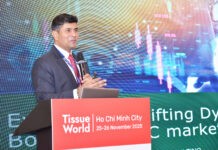

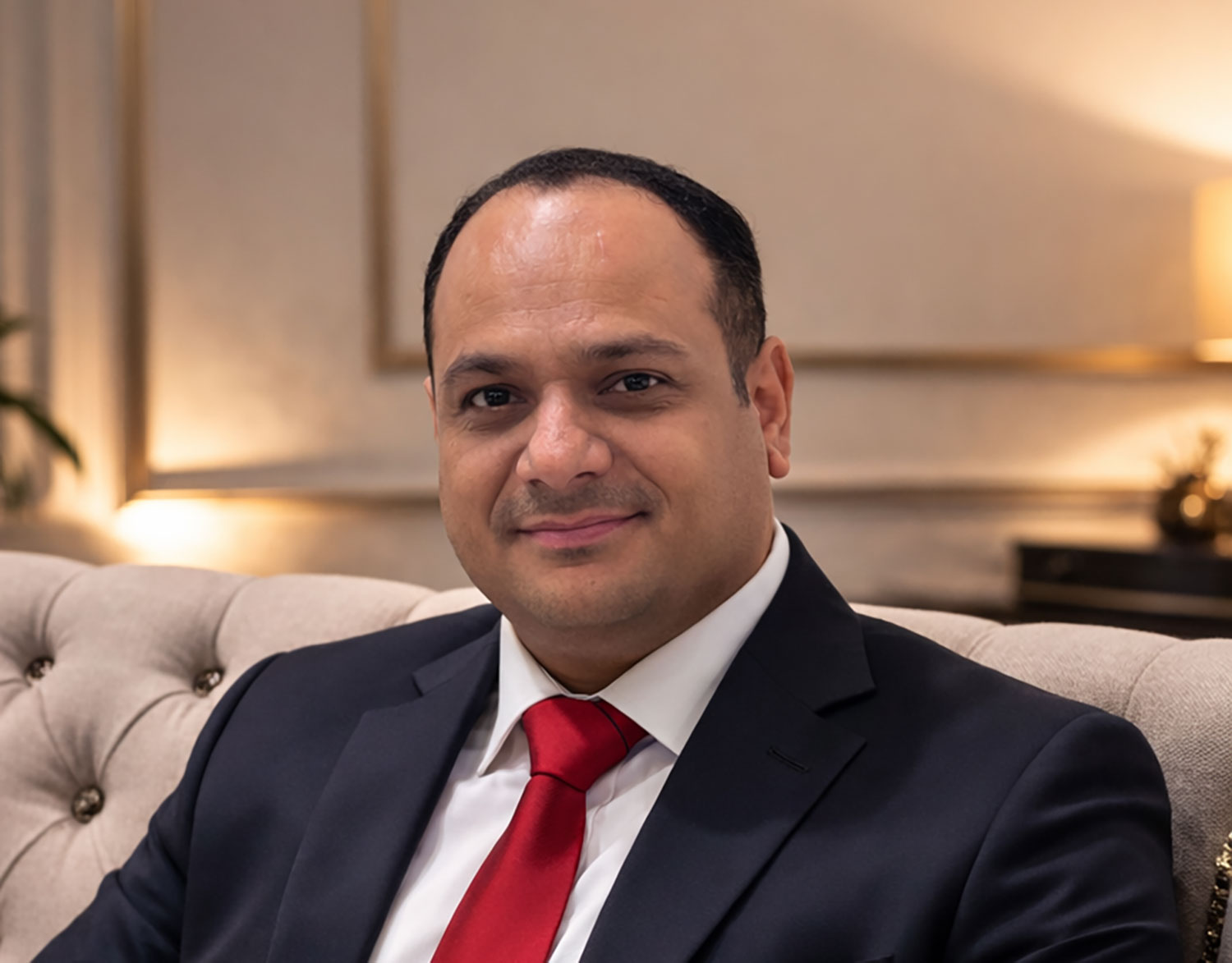
Tissue World Magazine Senior Editor Helen Morris spoke to Sunny Amin, Procurement and Logistics Manager, about how tourism – a key pillar of Saudi Arabia’s Vision 2030 – is helping to drive tissue demand, and a reason for its latest milestone investment.
Saudi Arabia’s Saudi Vision 2030 – a government initiative launched on 25 April 2016 by the Saudi government and Crown Prince Mohammed bin Salman – has three main pillars: to make the country the heart of the Arab and Islamic worlds, to become a global investment powerhouse, and to transform the KSA’s location into a hub connecting Afro-Eurasia.
A knock-on-effect currently occurring is the opening-up of travel and tourism to the kingdom, resulting in the highest travel statistics the country has ever seen – by 2030, the kingdom aims to attract 100m visitors annually, positioning itself among the world’s leading tourist destinations.
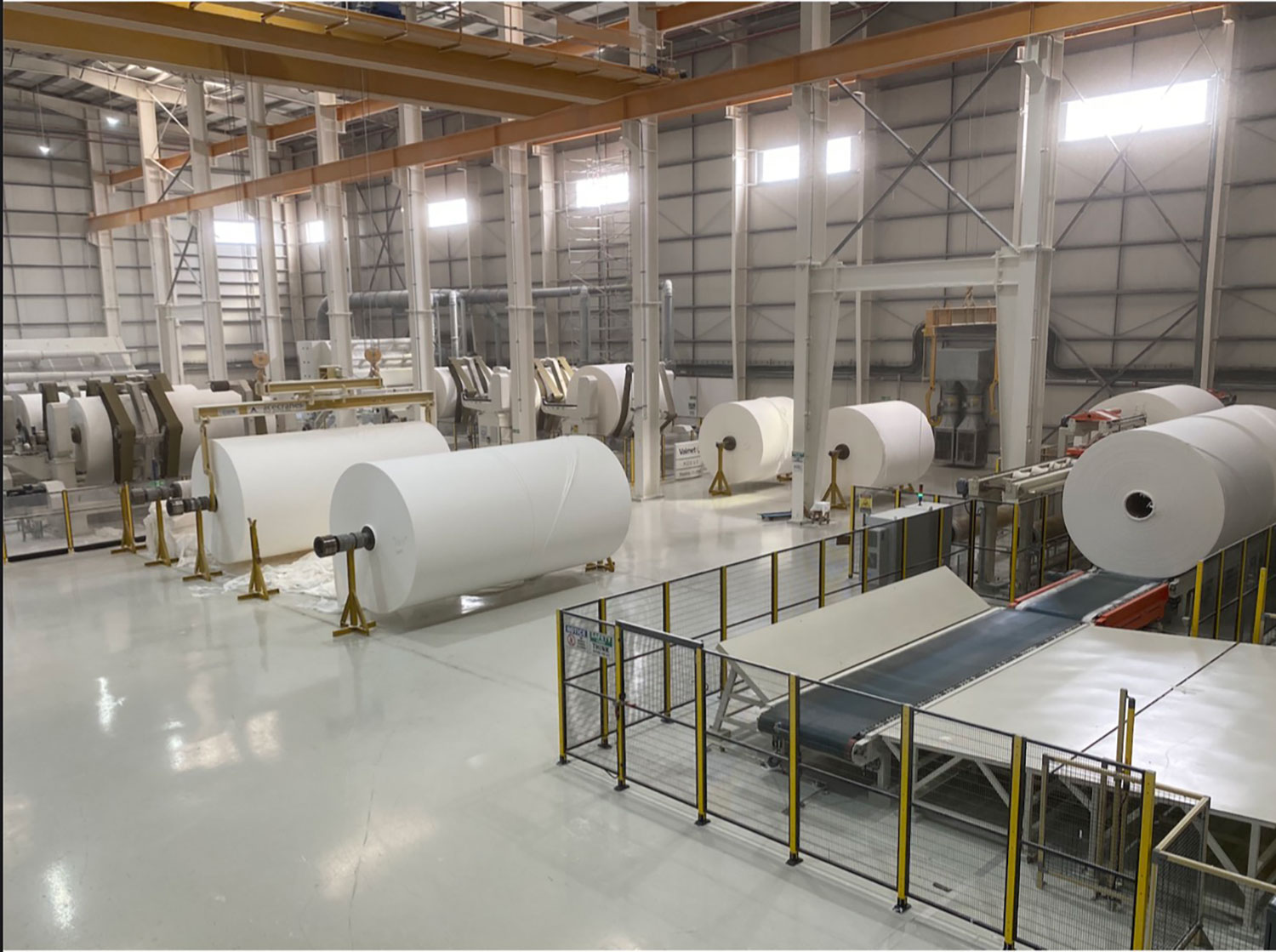
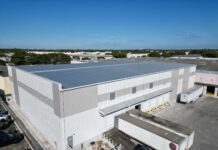
This is having a transformative effect for the region’s tissue markets and is a key reason for UAE-headquartered Crown Paper Mill’s (CPM) latest tissue investment – a second Valmet-supplied Advantage DCT 200HS, and its first to be started up in the KSA.
As a leading producer of jumbo tissue rolls in the region, the Jubail – based TM4 will have a production capacity of 60,000tpy and adds CPM’s current capacity to reach 160,000tpy.
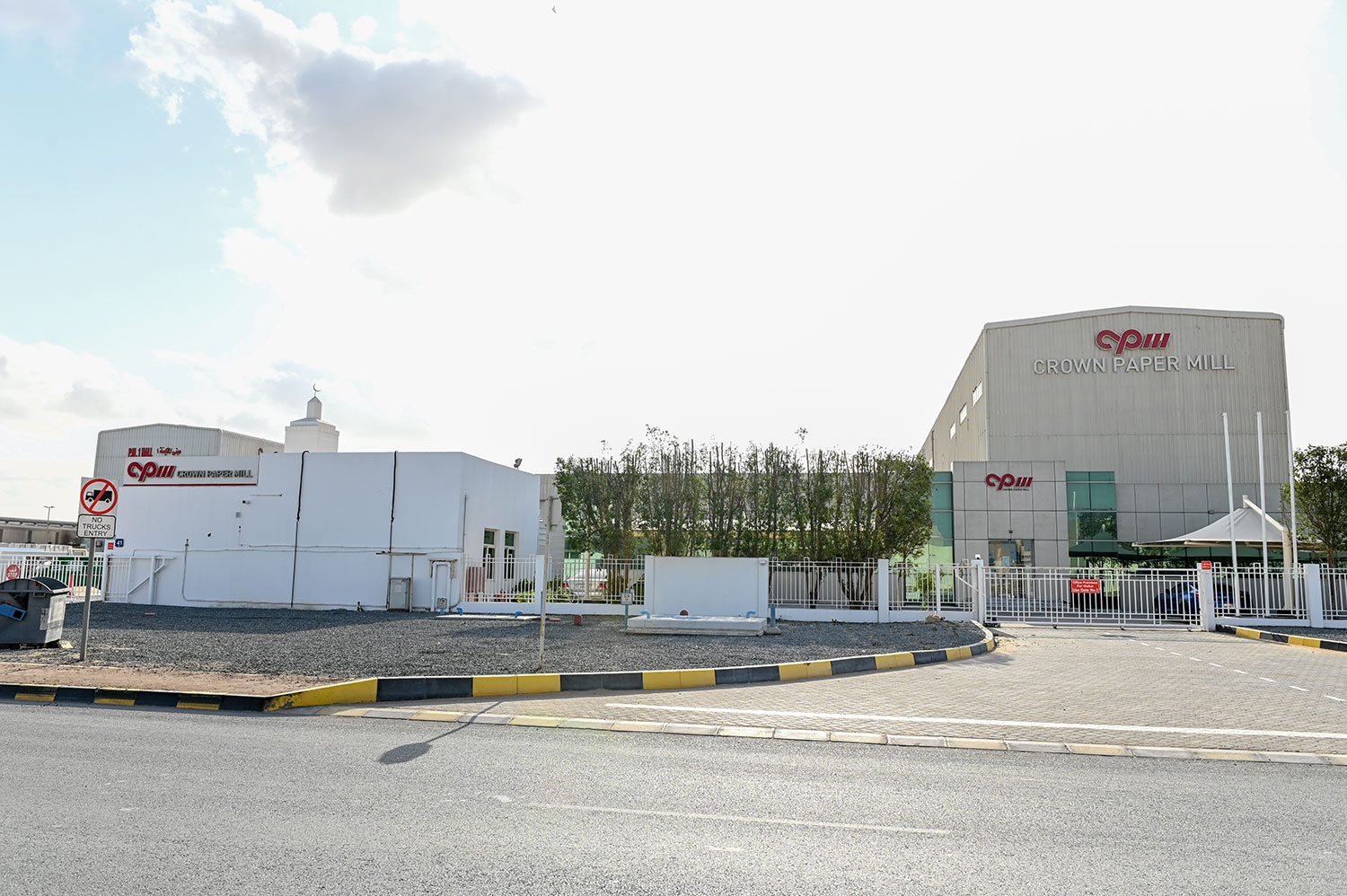
TWM first visited CPM in 2018, driving through the grand streets of the UAE’s capital and past towering glass skyscrapers, shopping malls, along the Sheikh Zayed Bridge to meet Managing Director Abdullah Al Khateeb at the company’s 50,000sqm plant. Then, as now, the company’s sights were set firmly on becoming the largest tissue manufacturer in the Gulf Cooperation Council. “There will be tough competition here in the next few years,” Al Khateeb had said. “We have a very clear strategy: to expand out of the Gulf, into the UK, the States, certain areas in Africa… wherever there are opportunities.”
Now in 2026, competition within the Middle Eastern tissue market has ramped up. As reported by ResourceWise, the region’s overall tissue capacity CAGR is 3.74%: Iran 13.17%, Saudi Arabia 6.05%, Iraq 4.73%, and Bahrain 4.42% showed notable growth, while Egypt has led replacements over the past twenty years. The UAE and Saudi Arabia have recently also expanded or planned additions, while Egypt, UAE, Saudi Arabia, and Iran account for 77% of the total tissue capacity.
Saudi Arabia in particular is a TM start-up hotspot including recent startup of Saudi Paper and Mepco.
Speaking in February over a Teams call, Sunny Amin, Procurement and Logistics Manager at Ittihad Paper Mill/ Crown Paper Mill LLC, paper division of Ittihad International Investment, a private holding and multi-disciplinary conglomerate, and parent company of CPM, explains how as the business celebrates its 20th anniversary, “a lot” has changed since 2018.
tissue products across the region
Investments over the years have specifically targeted the increasing demand for high-quality tissue products that have been growing in popularity in the Middle Eastern market. CPM was acquired by Ittihad International Investment Group in 2015, taking on TM1 and PMT-supplied TM2.
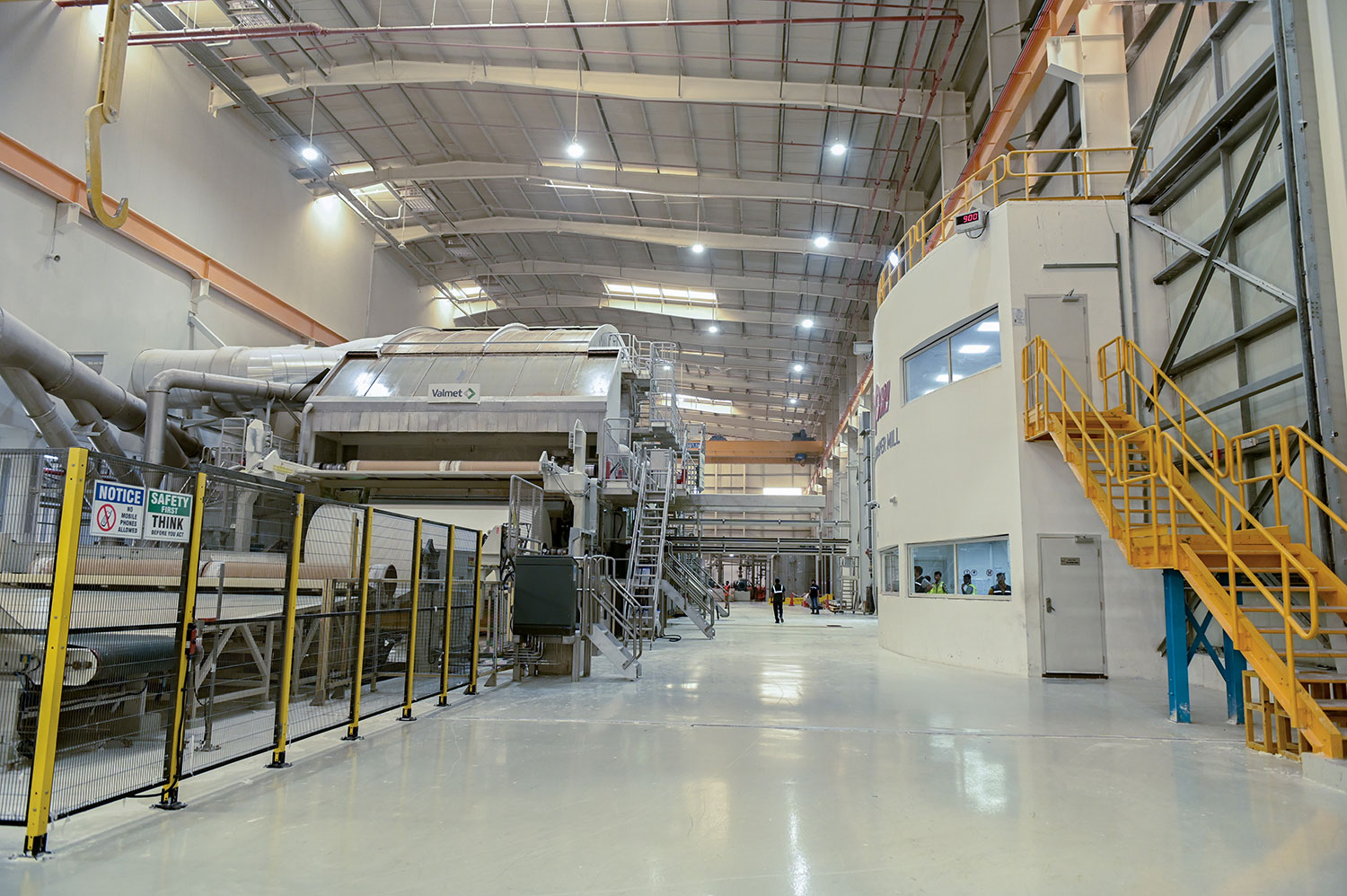
In 2019, TM3 was commissioned – a Valmet-supplied Advantage DCT 200HS line with a production capacity of 65,000tpy in Abu Dhabi UAE, bringing the company’s total tissue production capacity to 100,000tpy.
In 2023, the company saw a growing demand in Saudi market: “A new tissue plant housing TM4 is expected to start-up by May/June 2026,” Amin says. “It will be the similar Valmet-supplied machine we have in the UAE but with further new advanced technologies and features, and once this machine starts up our total annual capacity will go from 100,000tpy to 160,000tpy.
“We see the Saudi Arabian market as a very important market and have been and will continue to grow in the tissue business. We are also expanding our group tissue converting line a company called Metropolic Paper Industries also in Saudi Arabia, for example. A lot of new mills have started up in the KSA in the past three years, and yet still the demand was not met by the local manufacturers. We saw a gap in the market and took the decision of starting up in Saudi Arabia.”
He says the business expects tissue growth to remain at 4% year-on-year in Saudi Arabia: “This is being driven because they have opened their tourism and a lot of business opportunities, especially after Covid, we saw a big increase in the population there. Their GDP is also doing very well and their economy is strong, so we expect relatively stronger growth in coming years.”
His confidence in the growth of KSA’s tissue market is so strong he says we are already studying a start-up a second tissue machine in the country: “There is the probability of another machine in Saudi Arabia by 2028/2029, to match the local demand,” he says. “Looking at per capita consumption in the whole GCC region, KSA is one of the biggest consumers of tissue. This is driven by its large population, high hygiene standards, and Saudi Vision 2030. And, hopefully, we will have another tissue machine to fulfil this demand in the future.”
Having been with the business since 2012, Amin says the company’s key advantage is its procurement of pulp: “We are the biggest pulp buyer in the GCC market, importing around 450,000tpy and a major user of UAE ports both in terms of import and export. This gives us a competitive advantage to negotiate better shipping contracts compared to others in the region and makes our product competitive over others.”
In terms of energy costs and sustainability, he adds that the Valmet machines are “very energy efficient in conserving water and electricity compared to the other operating tissue machines in the region”: “We are also recycling the water and working on solar energy projects at our sites. Our products use FSC-certified sources fibres, and we are also working on the recycling grades,” he adds.
One of the “standout features” of the company’s new mill is the integration of Valmet’s state-of-the-art machinery, which he says offers “numerous advantages such as higher production efficiency, minimised chemical usage, and optimised raw material use. By embracing these next-generation manufacturing technologies, we are not only increasing efficiency but also positioning ourselves as a pioneer in sustainable tissue production.”
Are customers in the region asking for these types of products? “Yes, it’s becoming more mainstream. If you compare the market from five to 10 years ago, that was not what the customer was asking for. However, now it’s becoming increasingly common. Customers are asking about the sustainable sources of what and where they’re buying, it’s becoming much more important in the region.”
Because of the regional growth in tissue that the company has seen, Amin adds the business can forecast how the tissue market will likely continue to grow in Saudi Arabia: “With the ease of having e-visa portals for residents and tourists to travel across GCC, and also new residency initiatives such as the Golden visa in the UAE which is attracting investments in our area, this is all promoting tourism which is having a big impact on the tissue market. Before it was not the case, it was much more closed. It was not easy for someone from the UAE to travel to Saudi Arabia. They’re now introducing new unified visa for GCC tourist so if you have that one you can travel across GCC. It was announced last year and is probably coming into effect hopefully by end of 2026 or early 2027.”
It will help the business, he says, bringing more travellers and more tourism: “Especially in the KSA, increased tourism through Vision 2030 is really the force behind this.”
Some 80-90% of TM4’s 60,000tpy will stay in the Saudi marketplace, and he adds that by the time the second line (which is still in discussion) is potentially up and running to cover market requirements in KSA.
“Our idea is to focus from the UAE mill into the export markets in different parts of the world, such as the European market, African markets and USA. In addition to that, if the situation normalises in places such as Syria and Iraq which has a great potential of growth, this is another opportunity for us to grow our business.”
Another advantage of the Saudi Arabian market is that it is “a very well protected market” for the local manufacturers: “The way the region is going is very promising. One of the major reasons why we are going to Saudi Arabia are the customs tariff benefits of when you are importing between the two countries. They promote local manufacturers by implementing anti-dumping duties/custom duties on products which are manufactured locally and sufficient for market.”
AfH and private label products are both increasing in the region. Amin is seeing larger supermarkets increasingly wanting private label for their tissues, while AfH “is also increasing”, mainly because of the tourism. “If you look at the number of visitors to Saudi Arabia this year, it’s a record, the highest number ever of people visiting the country.”
During summer 2025, over 32m tourists visited the Kingdom – a 26% increase from summer 2024.
After Covid, people are also becoming more interested in hygiene, he adds: “They think more about the products they are using in the hygiene side, and this is also driving tissue demand in the country. For example, if you go back even just five years, the UAE’s total demand was 110,000tpy and this has now increase to 150,000tpy in 2025. This is mainly being driven by increases in population, 9.5m in 2021,11.5m in 2025, and it’s an increase of 1.5m people in just five years around 15%, increases in per capita consumption, GDP growth is also reflecting on that because incomes are increasing and so people are spending more on hygiene products, their spendings are going more there.”
While CPM is growing with investments, the company is also working on local investments in machine technologies and R&D across the sector: “We are intended to grow in tissue industry by investing in greenfield projects and acquisitions. When we have the 160,000tpy fully started-up, we will be the one of the biggest tissue manufacturers in the GCC.”
As a business, he adds the company is working on diversification of its products: “This is how our operation is working and if you look at the industry overall, this is what is happening, companies are growing downstream of supply chain. Major pulp manufacturers are getting into hygiene production, such as Suzano and Kimberly-Clark’s joint venture, and that’s the new norm in the industry which we will see more of in the coming five to 10 years.”
“We have also seen an increase in imports coming into the area, mainly from Indonesia and China,” he adds. “Especially after the tariff situations across world. That side is also getting more competitive because everyone sees the Middle East as a very attractive market in terms of pricing and product.”
As CPM, he emphasises the company is targeting the high-quality end of the market: “The specification in the region if you look at the market in the last five years has changed in terms of quality. Customers are looking for high spec tissue and we aim to deliver best quality with best service to our customers.”
“Key advantages for the business remain pulp, the quality of our products and service. We are the biggest pulp importer in the region with over 450,000tpy imported during 2025. This is one of key advantages for us to be competitive in both the paper and tissue businesses and it is something which our competitors don’t have. We have the advantage of the capacity to deliver both.
“We don’t see it as a difficult market going into Saudi Arabia because we have strong customers base established in KSA. Since 2007 our business has been established there, when we were exporting around 50-60% of our UAE-made tissue.”