



















Promotion, innovation investment, adding value, discounting, cost-cutting … industry strategies as the economy emerges from a slowdown. Report by Per Brandberg, Consultant, Euromonitor International.
Toilet paper continues to lead sales
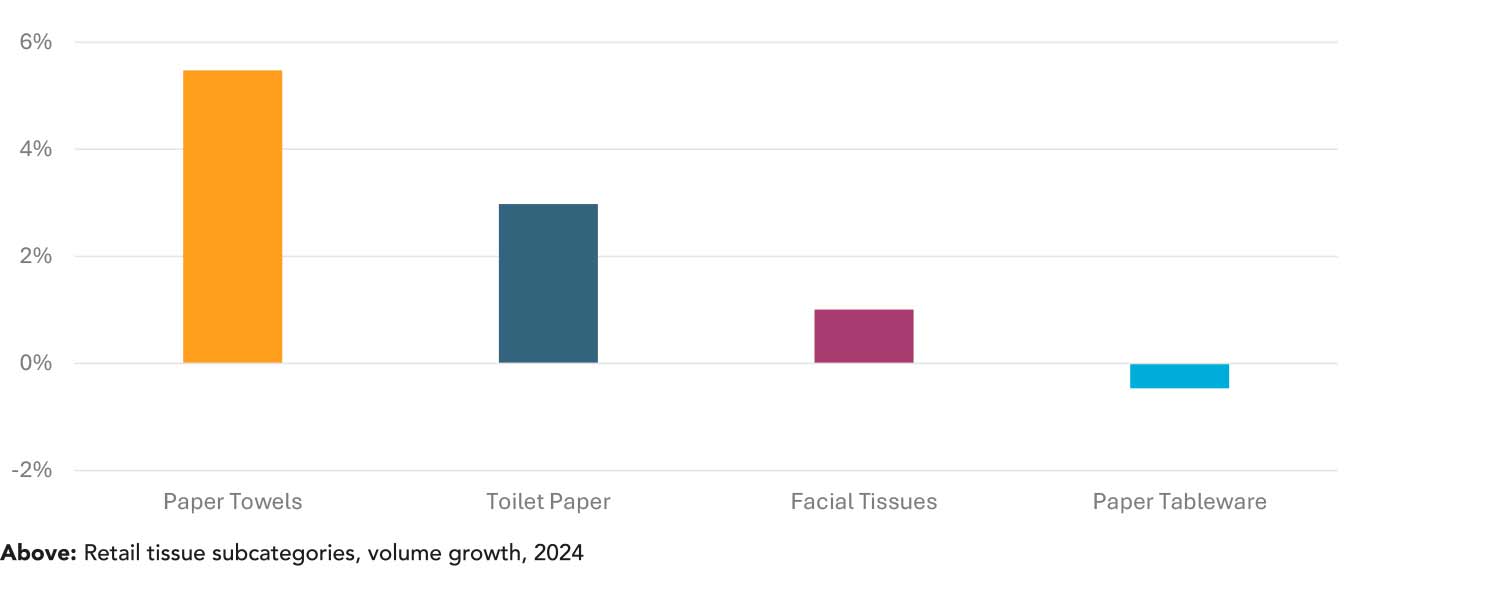
Having experienced significant price increases in recent years, the Portuguese retail tissue market saw a slowdown in current value growth in 2024, primarily due to a shift towards lower-cost brands and private label products. Toilet paper remains the largest category within retail tissue, due to its high penetration and frequent usage. Despite reaching maturity, the category managed to grow in volume terms in 2024, supported not only by household demand but also by small businesses like local lodgings, restaurants, and cafes that purchase in retail due to promotional campaigns.
Paper towels saw the highest rate of volume growth, following the declines of the previous two years, when consumers had rationalised usage to save money. The availability of less expensive options, including private labels offering large-sized packs at competitive prices, has contributed to this rebound.
Speaking of private label, they have a substantial presence in the Portuguese retail tissue market. The economic challenges of recent years have driven consumers toward more cost-effective options, bolstering private label growth. As a response to the increased competition from private labels, brands have stepped up investment in innovation, with established brands investing in premiumisation strategies to differentiate themselves from these more affordable competitors. This approach caters to consumers with higher purchasing power who are willing to invest in value-added products.
Premiumisation strategies include introducing products that emphasise attributes such as extra softness, unique fragrances (such as aloe vera and vanilla), and multi-ply options (3-ply and 4-ply) as well as premium features such as higher absorption and seasonally themed products. These enhancements cater to consumers seeking superior quality and a touch of luxury in everyday essentials.
New store openings further bolstered relevance and growth
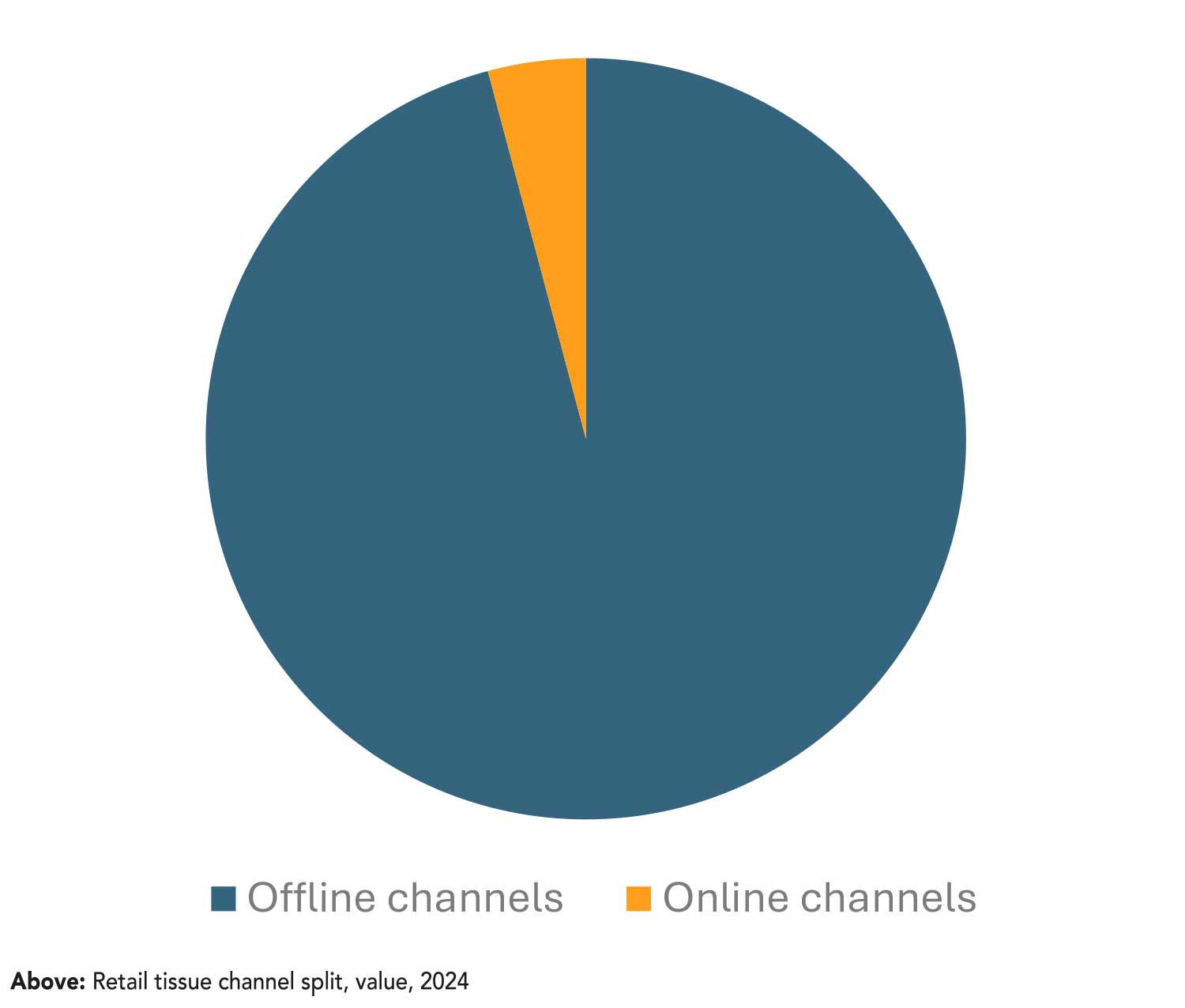
Supermarkets’ dominance follows alignment with consumer purchasing behaviours – specifically the desire for proximity, frequent shopping trips, and smaller basket sizes. In recent years, new store openings have further bolstered this channel’s relevance and growth. Supermarkets registered the highest rate of value growth within the grocery channel in 2024.
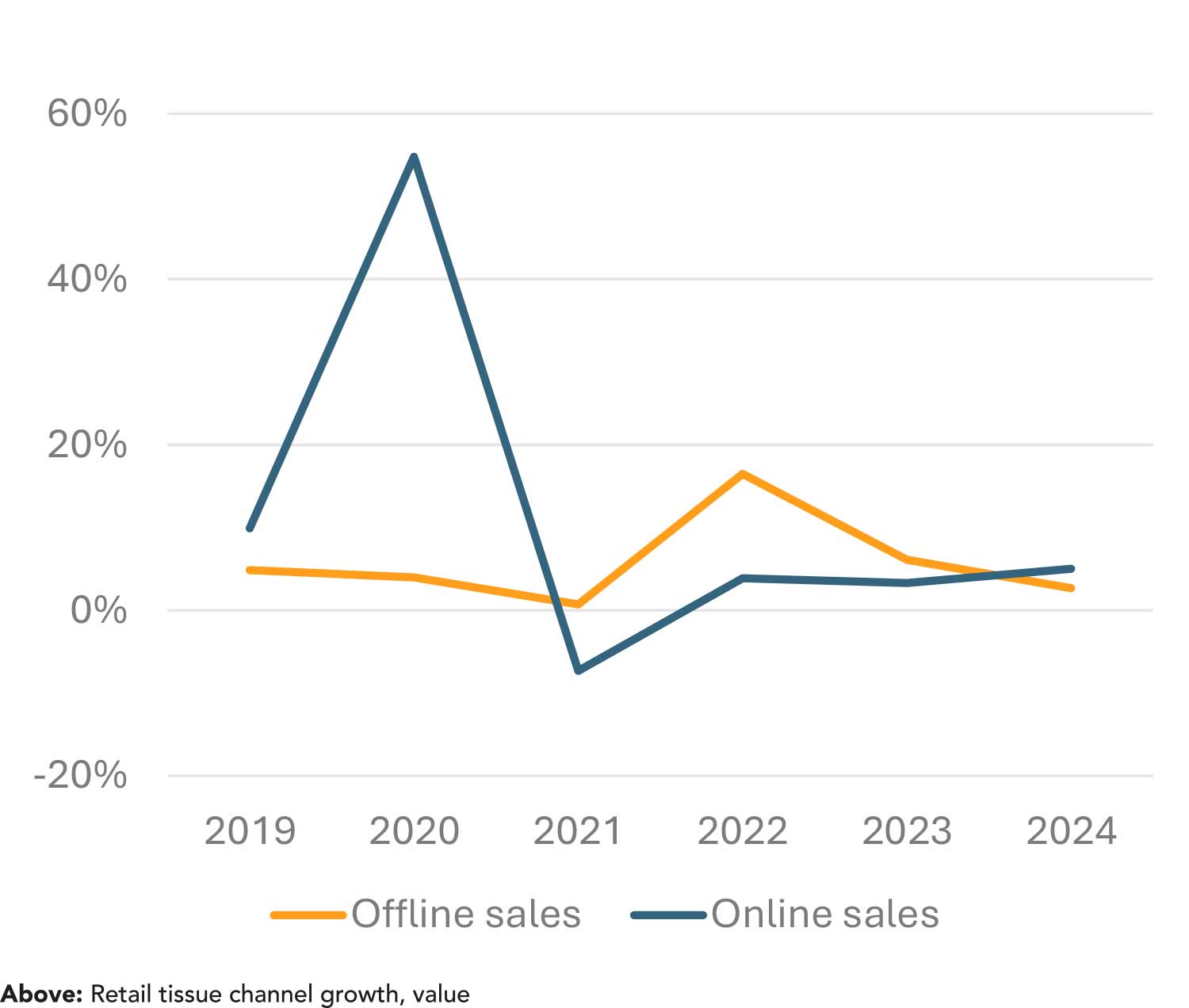
E-commerce gained a small amount of ground in 2024. The channel is expected to make considerable strides over the forecast period, driven by increasing digitalisation, the development of online retail platforms, and advancements in last-mile delivery solutions. However, Portuguese consumers still show a preference for physical stores. While delivery platforms are expected to boost e-commerce sales, delivery costs will continue to hinder wider channel adoption as Portuguese consumers remain price sensitive due to the high cost of living.
Retail tissue market will see greater premiumisation
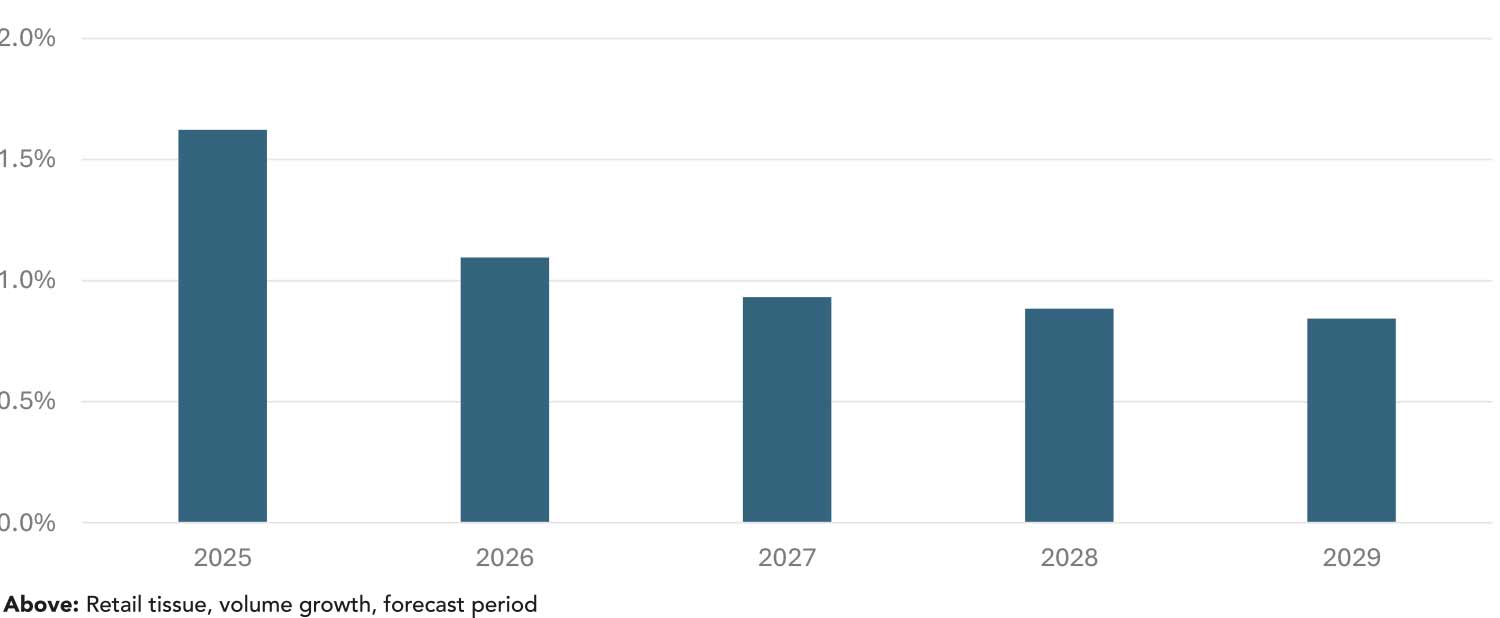
The retail tissue market in Portugal is highly mature, offering limited opportunities for future volume growth. Following significant price increases in recent years, a slowdown in value growth is anticipated over the forecast period (at constant 2024 prices). Manufacturers are responding to this challenge by focusing on premiumisation strategies, introducing higher-quality products characterised by features such as additional plies and enhanced softness which is expected to result in an increase in 3- and 4-ply toilet paper options in the coming years. Additionally, the fragrance trend observed in other markets, such as home care, is extending to toilet paper, alongside other benefits such as improved softness, and increased durability. More compact paper products are also set to grow, addressing logistical and stocking challenges while offering environmental benefits.
Among retail tissue products, paper towels are expected to present the best growth opportunities. Sales will be driven by improved economic conditions, which will encourage consumers to increase purchases of items they deem not strictly essential. During times of financial hardship, consumers tend to replace paper towels with alternatives, such as cloths, for cleaning surfaces.
Online shopping remains lower level for groceries
Online grocery shopping – driven by increasing consumer digitalisation, advancements in e-commerce platforms, and improvements in last-mile delivery solutions – is expected to gain traction but will remain less significant compared to categories like clothing or technology.
Consumers’ shopping preferences contribute to the slower adoption rate, such as frequency of shopping, proximity to physical stores and the tendency for smaller basket sizes. Additionally, challenges like maintaining competitive pricing and ensuring product availability have impacted the growth of online grocery platforms.
Sustainability gains importance as consumers looks for eco-friendly options
Sustainability continues to be a central focus in the retail tissue industry, with a growing emphasis on alternative fibre sources and environmentally friendly production methods. Consumers are increasingly concerned about deforestation and the environmental impact of traditional wood-based paper production. This has led to a heightened interest in tree-free paper made from non-wood fibres such as bamboo, kenaf hibiscus, hemp, and agricultural residues like sugarcane bagasse and straw.
The industry is also witnessing a shift towards unbleached, brown-coloured paper products. This change addresses consumer concerns about the chemicals used in the bleaching process and reflects a willingness to accept natural-coloured paper for environmental benefits. Products claiming reduced water usage and reliance on renewable energy sources are also expected to attract consumer preference. At the same time, technological advancements are also being pursued to improve the softness and appeal of recycled paper products in a bid to make eco-friendly options more attractive to consumers.