

















It is not often that the word “skyrocket” is applied to projected tissue growth.
Here are some of the figures which support Mr. Hoang Trung Son, Chairman of Vietnam Pulp and Paper Association, in his forecast: GDP increased eight times in 20 years; average annual growth of 6-7%, this year 8.5%; a strong recovery post-Covid-19 pandemic with CAGR 8.03%; target for the next decade 10%.
Rapidly increasing tissue production is set to see centrally located Vietnam play a key role in the 660m+ population ASEAN region. In 2024 Asia Pacific accounted for a third of global retail tissue sales with Vietnam fifth in value sales.
Competition is strong with production giant neighbour China. Vietnam’s investment in tissue paper production is booming – overcapacity may become an issue.
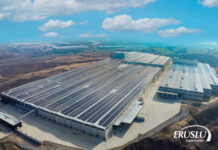
MarketIssues carries the comprehensive report of the success of TW Ho Chi Minh City.
Japan – tissue demand still increasing despite shrinking population
A ResourceWise analysis in Country Report suggest today’s Japanese tissue market may be the future for other countries.
The definition of a mature market, it has the added challenge of growth in a seriously declining population.
Just how resilient the market is shows in the figures: long-term growth almost 3%; per capita consumption at 21.5kg, among the highest globally; an economy ranked 5th worldwide; 18-year tissue production increasing by 2.75% CAGR. Technical and marketing innovation is advanced.
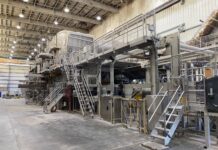
Just as the population overall is declining and ageing, so is its mill machinery.
Japan moves towards autonomous logistics
Japan’s interest in driverless trucks follows new safety regulations restricting drivers’ hours. Various other countries are already trialling them to counter rising fuel and warehousing costs, supply chain disruption, driver and labour shortages and increasing customer expectations for speed.
In excess of 1,000 are on the road globally with the US and China leading the way, a miniscule number given driver driven trucks – Germany alone had 3,827,663 trucks registered on 1 January 2025.
If this revolution is happening, it’s not yet out of first gear.
Will research into bamboo check the emerging trend?
A team at North Carolina State University in the US has carried out the first comprehensive research into bamboo fibre in tissue production. The results reveal ‘a clear deviation from prevailing assumptions.’
The report suggests the carbon footprint of bamboo is up to 32% higher than conventional wood-based alternatives, and that “technological efficiency and energy infrastructure exert a far greater influence on overall environmental performance than raw fibre type.”
ExitIssues carries the detailed analysis. The finding shouldn’t discourage the use of bamboo – rather, it should redirect attention to the factors that determine its environmental impact.