



















Report for TWM by Suzano’s Pablo Cadaval Santos, Research and Development Director, and Heloisa Ramires, Research and Development Executive Manager.
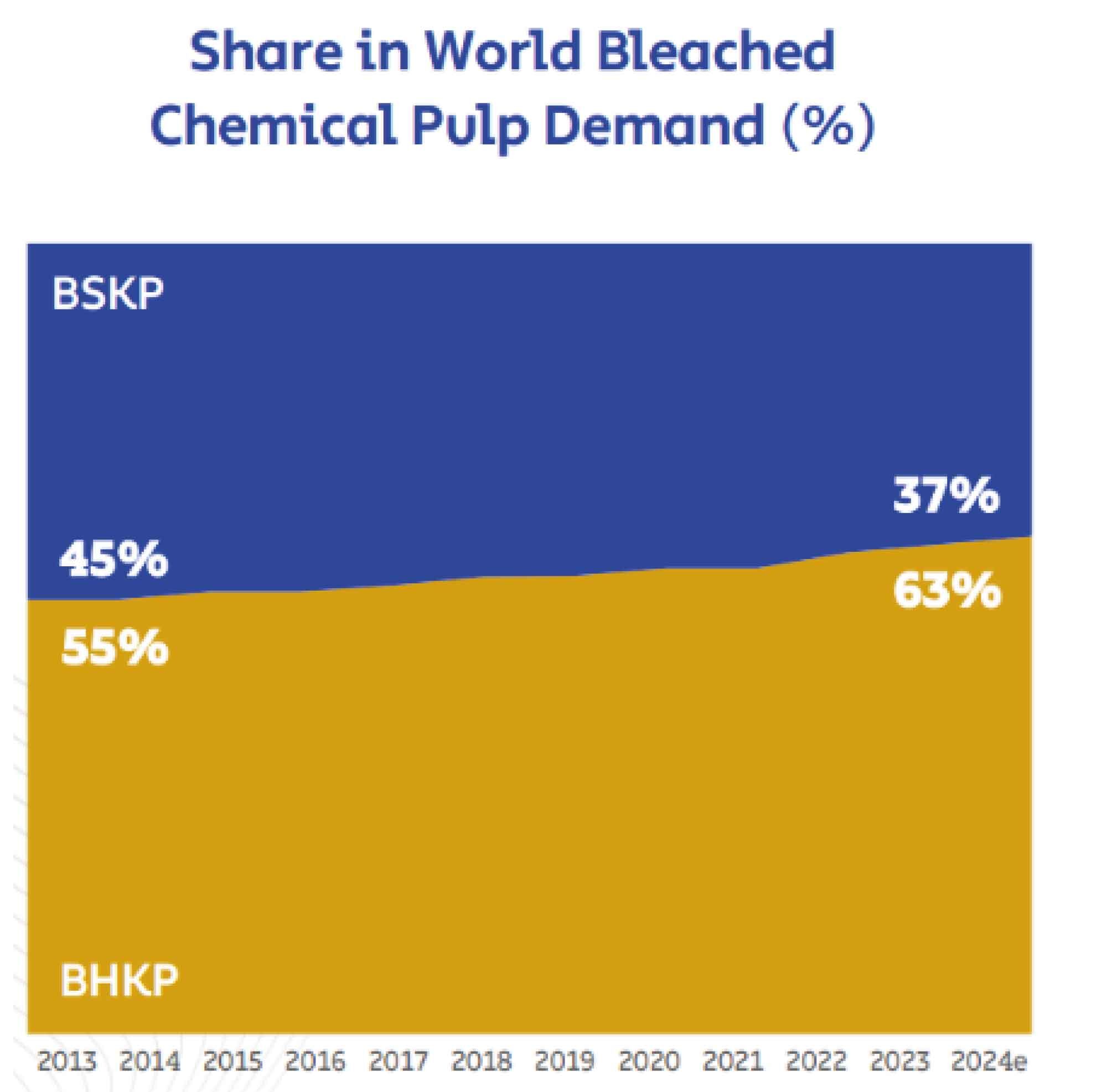
As global tissue demand continues to climb, the industry is proportionally shifting towards higher hardwood consumption (Figure 1). This trend is partly influenced by competitiveness challenges affecting NBSK pulp supply, with limited opportunity to increase volume growth, as well as environmental and regulatory pressures. Together with high capital requirements for modernisation, the industry’s supply landscape is gradually shifting.
Regardless of these pressures, much of the increasing market share for hardwood pulp – in particular BEKP pulp – has thanks to recent innovations been unlocking new opportunities for cost competitiveness and product sustainability.
As the world’s largest producer of eucalyptus pulp, Suzano has been innovating to support this shift, resulting in direct benefits for our customers.
One of the great advantages of eucalyptus fibre quality is a more uniform range of fibre lengths, homogeneity and smoothness in the paper furnish. This uniformity allows for more stable refining, consistent quality, greater control, and softness in the final product. Innovation at Suzano goes beyond the technical aspects of the fibre itself: we combine advanced fibre properties with cutting-edge technology, logistics excellence, and end-to-end services to provide our customers with reliable supply and lasting value.
Among the most significant breakthroughs we have achieved is the development and scale up of pulps with superior mechanical properties within our Biopulp products, called the Eucastrong family, which has been proven to be a great tool for increasing BEKP in the furnish while optimizing strength. The higher fibre population and flexibility of eucalyptus also allow for increasing the softness of tissue paper, while requiring reduced energy inputs and developing tensile strength at higher levels when properly refined under low intensity.
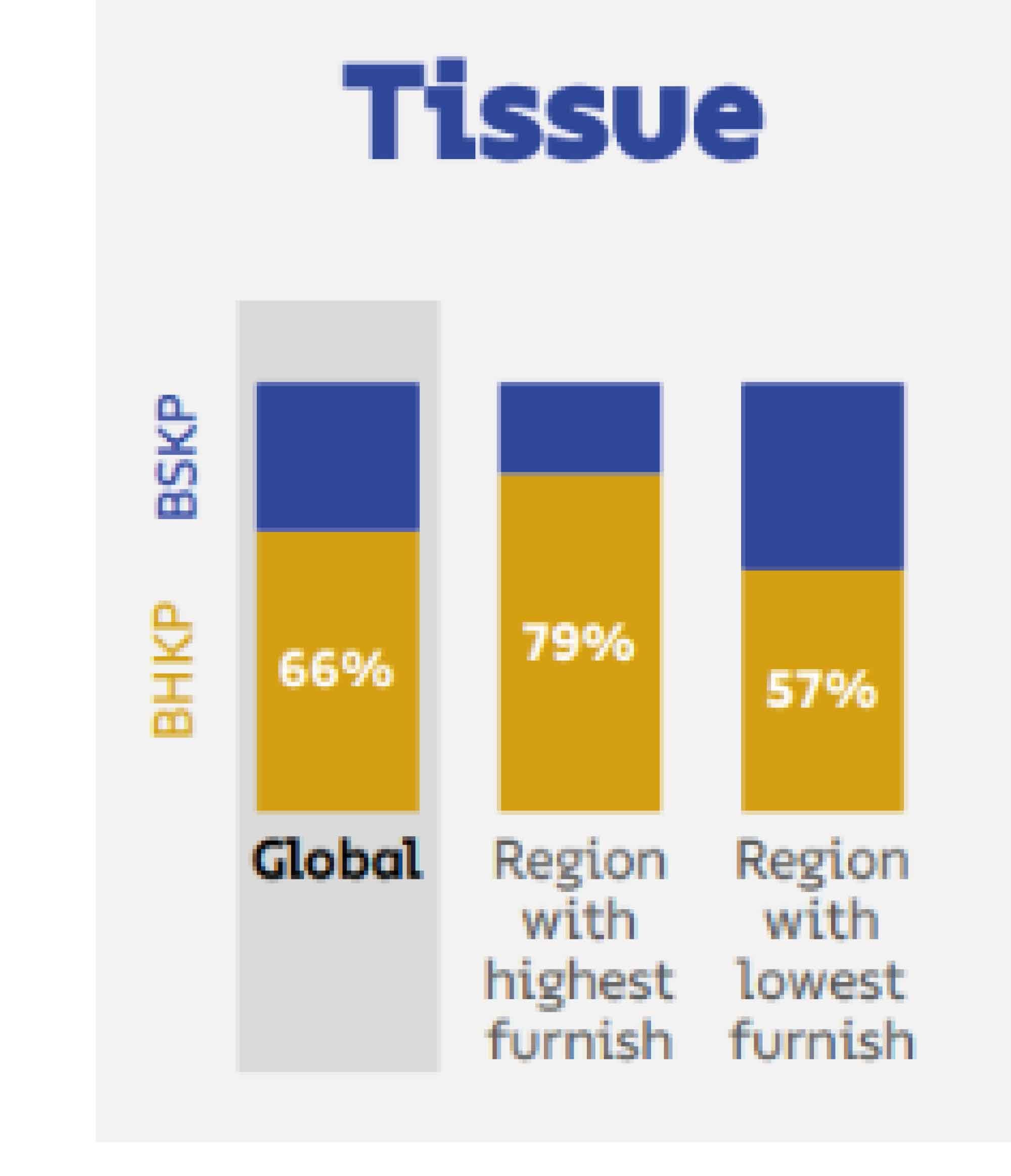
However, these benefits are not equally distributed geographically (Figure 2). There remains a significant gap between regions with the highest and lowest inclusion of BEKP, with countries such as Brazil and China reaching 100% for several grades, while maintaining efficient running of machines and high quality levels in finished products.
Closing this gap represents a clear commercial opportunity for the industry. The key questions are as follows: how can this shift be accelerated, what are the barriers to doing so, and which technical criteria need to be met?
Following our own learnings from reaching 100% BEKP content in tissue production while maintaining high quality and operational efficiency, we have developed several tools to help our customers overcome the technical and operational challenges that can come when changing recipes to increase proportions of eucalyptus, from wet end to converting.
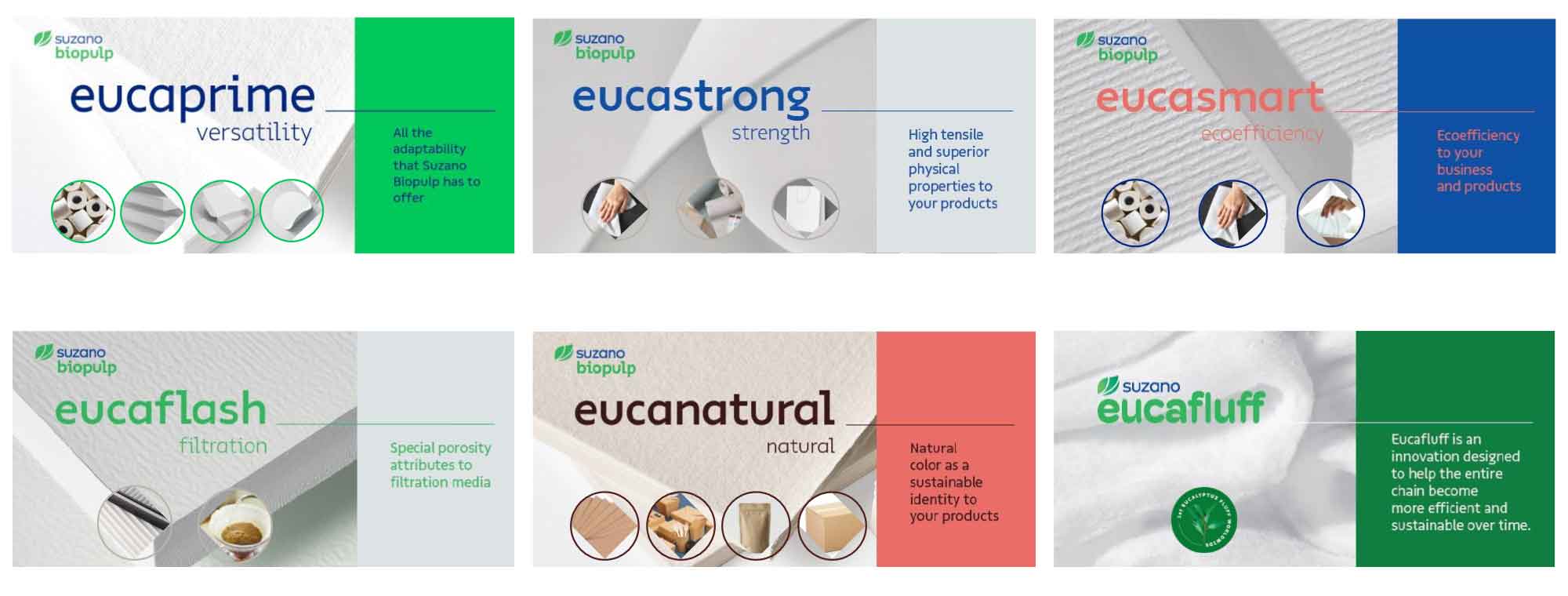
These are now packaged together into an end-to-end services model, which includes paper machine furnishes diagnosis, samples and paper benchmarking, assistance with pilot and industrial-scale trials, and software simulations. We also provide recommendations on suitable blends from our pulp product portfolio, with our Eucasmart, Eucanatural and Eucastrong products offering particularly useful attributes for tissue manufacturers. These have allowed our customers to enhance tissue quality, providing consistency, smoothness and softness while maintaining machine runnability.
In our experience, we have found that with services support, many trials resulted in manufacturers being able to increase BEKP in furnish by an additional 5-10%, even for those already running with furnishes near to 80% BEKP.
Case study:
moving towards 100% BEKP
It was once considered impossible to adapt TAD production lines to integrate high levels of BEKP. In our recent work with customers, at both pilot and industrial scale, we are now proving that this is not only technically achievable, but also profitable.
We supported an application study recently on a pilot using TAD technology, to explore how to move from 70% Eucalyptus and 30% NBSK bath tissue paper, to a 100% BEKP recipe.
The study started with pilot trials, and during the trial period, several alternatives were explored that included changes to refining configurations and the usage of one of the Eucastrong family of products, aiming to understand sheet properties and machine runnability.
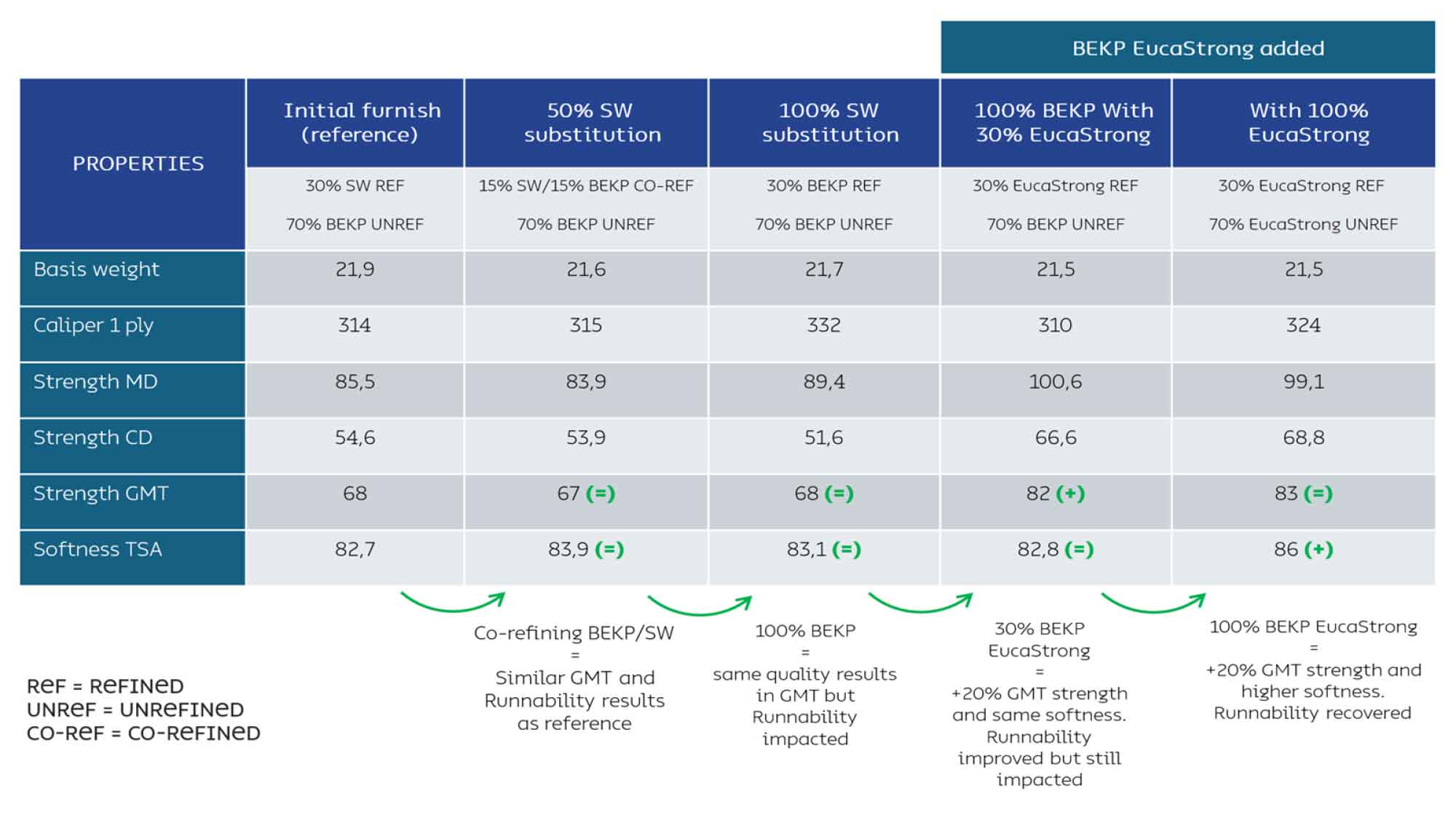
This found that it was possible to successfully substitute either 50% or 100% of softwood content (15% or 30% of the total furnish), according to Figure 4, by using specific refining strategies and different types of eucalyptus in the recipe. In both scenarios, sheet properties were maintained or improved, with no impacts on runnability when integrating refined Eucastrong BEKP into the recipe.
These pilot results enabled the move forward to industrial trials, understanding how this could be applied in a commercial context. This was done using a TAD machine running bath tissue, partially substituting softwood furnish with Eucastrong alongside a lower specific edge load (SEL) in the refining for both the hardwood and softwood lines. This resulted in a total content migration of around 10%, creating significant long-term cost savings and enhanced profitability by reaching a total furnish content industrially of around 90% BEKP in total.
The fibre transition in tissue is more than a technical adjustment. It is a pathway to a more competitive, efficient, and sustainable industry. Innovation is a key enabler of this journey, ensuring that the benefits of eucalyptus pulp can be shared more broadly across regions.
This article was written for TWM by Suzano’s Pablo Cadaval Santos, Research and Development Director, and Heloisa Ramires, Research and Development Executive Manager.
1 Pulp and Paper Products Council, “Monthly Reports and Forecasts,” Jan.2025, Proprietary chart: Share in World Bleached Chemical Pulp Demand, 2013-2024.
2 Fisher International – FisherSolve Next, Version 2025.1, proprietary database, Jan.15, 2025.